

From Esoteric to Pure Land and Huayan Buddhism: Uṣṇīṣavijayā Dhāraṇī Mandala in Liao Buddhism
DOI: https://doi.org/10.31065/kjah.307.202009.005
Abstract
This paper examined three representative Uṣṇīṣavijayā Dhāraṇī Mandalas in Liao pagodas. In the mid-eleventh century, as exemplified in the mandalas from Chaoyang North Pagoda and Yingxian Timber Pagoda, the Uṣṇīṣavijayā Dhāraṇī Mandala were designed based on the Tang dynasty ritual manual and sutra translated by Amoghavajra. At the same time, these mandalas, as well as the Uṣṇīṣavijayā Dhāraṇī Mandala at the Daming Pagoda from the late 11<sup>th</sup> century, share details not bound to the Tang scriptures. Their mostly matching arm positions suggest that they shared a visual model for the Uṣṇīṣavijayā Dhāraṇī Mandala that was developed and circulated in Liao. In addition, it is notable that these Uṣṇīṣavijayā Dhāraṇī Mandalas from Liao were all made in different formats. Chaoyang North Pagoda’s was made in two-dimensional form on gold plate, Yingxian Timber Pagoda’s in three-dimensional form using wood and clay, and Daming Pagoda’s in relief on the pagoda’s exterior. Their locations also varied, ranging from Liaoning and Shanxi Provinces to Inner Mongolia. Despite such differences of medium and region, they shared the same model and show similarities even in such details as the bodhisattvas’ arm positions.
By the late eleventh century, however, the Uṣṇīṣavijayā Dhāraṇī Mandala had evolved into a more complicated form in Liao, combining more deities not only from esoteric Buddhism but also from Huayan and even Pure Land Buddhism. The textual mandala engraved on the ceiling of Baitayu Pagoda aptly exemplifies Liao modification of the Uṣṇīṣavijayā Dhāraṇī Mandala. Since Baitayu Pagoda was built for the rebirth of the eminent Liao monk Sixiao, the contents of its Uṣṇīṣavijayā Dhāraṇī Mandala help us infer, though only partially, the contents of Sixiao’s lost commentary and exegesis in which he probably discussed the Uṣṇīṣavijayā Dhāraṇī Mandalas (i.e., Eight Great Bodhisattvas Mandala with Viarocana Buddha in the center). As Sixiao was one of the most erudite monks in Liao, whose writings were circulated in neighboring lands, including the Koryŏ, it is difficult to imagine that his writings on the mandala had no influence on the mandala prepare for his afterlife at Baitayu Pagoda. This modified Uṣṇīṣavijayā Dhāraṇī Mandala appears to have circulated widely in late-eleventh-century Liao as the deities newly added in this mandala were also featured in Daming Pagoda’s mandala. All of these factors suggest that the Uṣṇīṣavijayā Dhāraṇī played an important role in Liao Buddhism and contributed to the development of mandalas and pagoda architecture unique to the Liao empire.
Ⅰ. Introduction
The Uṣṇīṣavijayā dhāraṇī (Foding zunsheng tuoluoni 佛頂尊勝陀羅尼), known for its efficacy in removing bad karma and prolonging one’s lifespan, was one of the key Buddhist incantations in premodern China.1 Once the incantation became widespread in the Tang dynasty (618-907), it began to engender new types of material culture. Perhaps the best-known monument linked to this incantation was the jingchuang 經幢, or dhāraṇī pillar, that was erected for engravings of its text during the Tang.2 Such pillars proliferated throughout the Liao dynasty (907-1125).3 During the Liao period, however, another type of ritual object formed a main branch of the material culture pertaining to the Uṣṇīṣavijayā dhāraṇī—the mandala that was used for activating the power of this important incantation.
As this paper shows, the Uṣṇīṣavijayā Dhāraṇī Mandala, consisting of the Eight Great Bodhisattvas with a Vairocana Buddha in the center, played a crucial role in Liao dhāraṇī practice. By exploring archaeological traces of the mandalas remaining in the representative pagodas from Liao, this paper elucidates how this mandala was understood, used, and modified in Liao Buddhist practice. Such an examination offers the rare opportunity to broaden our understanding of the evolution of the Uṣṇīṣavijayā dhāraṇī practice in the late medieval period after its initial flourishing in the Tang. It also sheds new light on Liao esoteric Buddhism. Mandalas from Liao pagodas inform us that esoteric Buddhism in Liao was integrating Pure Land and Huayan Buddhism in practice by the late eleventh century. As this paper reveals, early Uṣṇīṣavijayā Dhāraṇī Mandalas from the mideleventh century showed fidelity to instructions in Tang scriptures translated by Amoghavajra (Bukong Jingang 不空金剛, 705-774), while exhibiting Liao characteristics only in details unrelated to the basic iconography. In the late eleventh century, however, the mandala transformed into a more complicated form and absorbed deities not only from esoteric Buddhism but Huayan and Pure Land Buddhism as well.
The Uṣṇīṣavijayā Dhāraṇī Mandalas remaining in the Liao pagodas are valuable data to fill lacunae in the written documentation of Liao Buddhist practice. Few writings by Liao monks have survived. Some are included in the Newly Compiled Comprehensive Catalogue of Canonical Works of the Various Schools by the Koryŏ dynasty’s prince-monk, Ŭich’ŏn 義天 (1055-1101).4 The catalogue informs us that Sixiao 思孝 (also known as Great Master Haishan 海山大師), one of the most eminent monks in Liao, wrote a commentary and exegesis on the mandala, but their contents are unknown because the catalogue only records their titles. Mandalas discussed in this paper help to deductively reconstruct his understanding of the Uṣṇīṣavijayā Dhāraṇī Mandala.
II. Text and Image: Early Liao Mandala and Tang Scriptures
This paper’s investigation into the Uṣṇīṣavijayā Dhāraṇī Mandala begins from a gold mandala excavated from Chaoyang North Pagoda (1043-44) (Fig. 1). The production of this mandala dated to 1043 was supervised by the Great Master Xuanyan 宣演大師, a high-ranking monk from the Supreme Capital of Liao.5 Reflecting his deep knowledge of the Buddhist scriptures, the mandala exhibits close interaction between text and image. As shown below, it bears the standard iconography that was based on textual sources from the Tang. Following the Buddhist scriptures, it adopts the simplest form of iconography without any additional deities or decorations aside from those mentioned in the scriptural instructions.
The mandala was found when archaeologists opened the relic depository in the pagoda’s twelfth eave in 1988.6 It was discovered in the small jingta 經塔, or “sutra-pagoda,” that had been placed at the depository’s center (Fig. 2).7 Among the four layers of cylindrical metal that formed the main body of the “sutra-pagoda,” the third layer, made of pure gold, bore an engraving of the mandala (Fig. 1). In the rectangular frame of this mandala, eight bodhisattvas surround a Buddha in the center. The central Buddha’s wisdom-fist mudrā (zhiquanyin 智拳印)—holding his left index finger in his right fist—indicates that he is Vairocana Buddha. The right side of the mandala has three lines of inscription, which include the official rank and name of the Great Master Xuanyan who supervised the construction of Chaoyang North Pagoda, suggesting the importance of this mandala in the ritual function of the pagoda as a whole. The relic depository, where the gold mandala was discovered, had one more mandala engraved into the stone of the relic depository’s main wall, 8 which further attests to the significance of the mandalas’ role in the relic depository.
The relic depository, as I have discussed elsewhere, was designed as a ritual altar for activating the thaumaturgic power of the Uṣṇīṣavijayā dhāraṇī.9 Suffice it to say, though, that the gold and stone mandalas were central ritual apparati that transformed the relic depository into a ritual altar for the Uṣṇīṣavijayā dhāraṇī. In particular, the “sutra-pagoda,” where the gold mandala was discovered, played the role of benzun本尊, or main object of veneration, in the Uṣṇīṣavijayā dhāraṇī ritual practiced in Liao.
Now let us examine the visual characteristics of the mandalas from Chaoyang North Pagoda. The Liao mandalas had a simple square format in which only eight bodhisattvas and a central Vairocana Buddha were portrayed. Among the dozens of Buddhist scriptures that mention the Eight Great Bodhisattvas,10 the textual sources for the mandala were Ritual Manual for Chanting the Uṣṇīṣavijayā dhāraṇī and Sutra of the Eight Great Bodhisattvas Mandala, both of which were translated by Amoghavajra.11 The former is the only sutra that instructs practitioners to make a mandala of the Eight Great Bodhisattvas with Vairocana Buddha seated in the center. The Liao mandala’s square format also originates from the Ritual Manual. For the chanting ritual of the Uṣṇīṣavijayā dhāraṇī, according to its instructions, the practitioner should prepare a square mandala divided into nine seats to enshrine Vairocana Buddha and each bodhisattva.12 A silver plate inscribed with the Uṣṇīṣavijayā dhāraṇī was enshrined inside the “sutra-pagoda,” which further testifies to the function of the gold mandala forming the body of the “sutra-pagoda” as an enactment of the dhāraṇī (Fig. 3).
Fortunately, the gold mandala has been excavated intact, and the attributes in the hands of the eight bodhisattvas are clearly legible. The attributes portrayed in the gold mandala from Liao conform to those of the Eight Great Bodhisattvas described in the Sutra of the Eight Great Bodhisattvas Mandala exactly.13 As described in the sutra, for example, Avalokiteśvara bodhisattva, on the proper right side of Vairocana Buddha, holds a lotus flower (Fig. 4).14 Not only Avalokiteśvara bodhisattva but all eight bodhisattvas have attributes that conform exactly to those described in the scripture, as shown Table 1.
This gold mandala from the Liao period is very rare in its perfect consonance between image and text. Its meticulous fidelity to the Sutra of the Eight Great Bodhisattvas Mandala makes it a notable case in the history of Buddhist art. Before the Liao dynasty, it is difficult to find a representation of the Eight Great Bodhisattvas whose eight attributes all conform to the sutra.15 Such iconographic fidelity to the sutra can be found only in the depictions of the Eight Great Bodhisattvas in later Japanese compendia of Buddhist iconographies produced after the 12th century.16 Although the Eight Great Bodhisattvas had been portrayed in various mandalic forms during previous dynasties, including those in the murals in Dunhuang,17 almost none shows such perfect conformity with the sutra.18 Attributes of at least one or two bodhisattvas deviated from the scriptural description in the mandalas before the Liao dynasty.
Besides the eight attributes, this Liao mandala includes further details that conform to the sutra, suggesting that it was carefully designed in reference to the Sutra of the Eight Great Bodhisattvas Mandala.19 Explanations in the sutra include which hand holds the attribute and what mudrā the other hand forms. The relevant passage of the sutra reads:
Then, say the mantra of the Buddha:20 “Oṃ mahāmira sāvāha.”
Then, visualize the Buddha in the mandala, whose body is gold-colored. He has thirty-two sacred bodily marks and sits on a lotus pedestal.21
Next, say the mantra of Avalokiteśvara bodhisattva: “Hūṃ hrī hakvanama sriye sāvāha.”
Then, visualize Avalokiteśvara in the mandala, whose body is red, his right hand holding a lotus flower, and his left hand forming the varada mudrā (the wish-granting gesture). On his crown is Amitābha Buddha.
Next, say the mantra of Maitreya bodhisattva: “Mehariya sāvāha.”
Visualize Maitreya bodhisattva [seated] behind Avalokiteśvara bodhisattva. His body is gold-colored. His left hand holds a bottle, and his right hand forms the abhaya mudrā (the fear-not gesture). On his crown is a small stūpa. He is seated with his legs crossed.
Next, say the mantra of Ākāśagarbha bodhisattva: “Ā avaya sāvāha.”
Visualize Ākāśagarbha bodhisattva seated behind the Buddha. His left hand is placed before his heart and holds a jewel, while his right hand in the varada mudrā sends out immeasurable treasures.
Next, say the mantra of Samantabhadra bodhisattva: “Hrī avaya sāvāha.”
Visualize Samantabhadra bodhisattva seated on the left of Ākāśagarbha bodhisattva. He wears a crown with the images of the Five Buddhas on his gold-colored body, holding a sword in his right hand and forming the varada mudrā with his left. He sits with his legs crossed.
Next, say the mantra of Vajrapāṇi bodhisattva: “Oṃ vamrava sāvāha.”
Visualize Vajrapāṇi bodhisattva seated on the left of the Buddha. His right hand holds a vajra (adamantine scepter), and his left hand rests on his groin. He wears a crown with the image of the Five Buddhas. His body is blue and he sits with his legs crossed.
Next, say the mantra of Mañjuśrī bodhisattva in the shape of a boy: “Śrī sarama sāvāha.”
Visualize Mañjuśrī bodhisattva seated before Vajrapāṇi bodhisattva. His appearance is that of a young boy with five topknots. His left hand holds a blue lotus flower on which there balances a five-branched vajra, and his right hand forms the varada mudrā. His body is gold-colored, and he sits with his legs crossed.
Next, say the mantra of Sarvanivaraṇaviṣkambhin bodhisattva: “Nikvarana sāvāha.”
Visualize Sarvanivaraṇaviṣkambhin bodhisattva seated on the right of Mañjuśrī bodhisattva. His body is gold-colored. His left hand holds a wish-fulfilling flag, and his right hand forms the varada mudrā. He is seated with his legs crossed.
Next, say the mantra of Kṣitigarbha bodhisattva: “Gasā harā sāvāha.”
Visualize Kṣitigarbha bodhisattva seated before the Buddha.22 His crown is decorated with jewels. His face, whose countenance shows compassion for all sentient beings, is lustrous, gentle and calm. In his left hand, he holds a bowl under his navel. He holds his right palm downward while, with thumb to index finger, he consoles all sentient beings.23
The eight bodhisattvas in the gold mandala from Chaoyang North Pagoda faithfully adhere to every detail of this description. The hands of all bodhisattvas—except for Avalokiteśvara, whose left and right hands are transposed—fastidiously follow the account in this sutra (Table 2). For example, the third bodhisattva, Ākāśagarbha, seated above Vairocana Buddha (i.e., behind the Buddha) holds a jewel before his chest with his left hand, conforming to the sutra (Fig. 5). His right hand forms the varada mudrā, in which he shows his palm to signify that he will grant one’s wishes. Small beads dropping from this hand visually represent a phrase from the sutra, “his right hand in the varada mudrā sends out immeasurable treasures.” As for Mañjuśrī bodhisattva in the lower right, not only his hands but also his hairstyle follow the sutra, “His appearance is that of a young boy with five topknots” (Fig. 4). Unlike other bodhisattvas in the mandala who wear tall crowns, Mañjuśrī bodhisattva has topknots, a common hairstyle for young boys in premodern China.
As for the placement of each bodhisattva in the Liao gold mandala, it follows the instructions from the Ritual Manual,24 clarifying its relationship with the scriptures from the Tang dynasty. The Ritual Manual instructs that the practitioner should place the first bodhisattva Avalokiteśvara to the right of Vairocana Buddha and place the following bodhisattvas in the clockwise direction when making the mandala for the chanting ritual of the Uṣṇīṣavijayā dhāraṇī.25 The placement in the Liao mandala conforms to this instruction precisely (Fig. 4). Also following this ritual manual, the Liao mandala places Vairocana Buddha in the center.
This placement of Vairocana is the distinctive feature of the Eight Great Bodhisattvas Mandala of Liao. As far as I know, no mandala with the Eight Great Bodhisattvas from Liao places a different kind of Buddha at the center. Unlike Liao, other dynasties, including Tang and Koryŏ (918-1392), had the Eight Great Bodhisattvas Mandalas with Rocana Buddha or Amitābha Buddha at the center.26 Earlier examples in India had Šakyamuni Buddha at the center. In the Liao, however, the Eight Great Bodhisattvas Mandala always featured Vairocana Buddha in the center. Only those with Vairocana Buddha in the center functioned as mandalas for the Uṣṇīṣavijayā dhāraṇī ritual.27 In other words, the Eight Great Bodhisattvas Mandala in the Liao context was none other than the Uṣṇīṣavijayā Dhāraṇī Mandala, which reflects the height of Uṣṇīṣavijayā dhāraṇī practice in the Liao dynasty.
Ⅲ. Three-dimensional Mandala
Unlike the mandala from Chaoyang North Pagoda that was discovered in intact, the original iconography of the mandala in Yingxian Timber Pagoda (ca. 1056) is more challenging to piece together due to its damaged condition. On the uppermost floor of Yingxian Timber Pagoda, a five-story wooden pagoda in present-day Ying County, Shanxi Province (Fig. 6), the mandala was situated. Each of its stories featured a different group of Buddhist statues. The nine statues relevant to our discussion—a Buddha and eight bodhisattvas—are enshrined in the pagoda’s fifth story (Fig. 7).
The wisdom-fist mudrā of the Buddha statue indicates that he is Vairocana Buddha. But the hands of all eight bodhisattvas, sadly, have been lost. In this state, it is impossible to tell what kinds of attributes they held. After Lü Jianfu’s book on the history of Chinese esoteric Buddhism briefly mentioned that the fifth story of this pagoda had been installed with an altar of the Eight Great Bodhisattvas Mandala,28 quite a few papers called these statues the Eight Great Bodhisattvas.29 Recently, Li Jingjie suggested that these may be the four perfection bodhisattvas and the four offerings bodhisattvas from the Perfected-Body Assembly (Chengshen hui 成身會) in the Diamond World Mandala.30 These previous studies, however, did not attempt to identif y individual statues at Yingxian Timber Pagoda. Because the hands were destroyed, unfortunately it has been assumed that the statues cannot be respectively identified. They were simply assumed to be the Eight Great Bodhisattvas or the eight bodhisattvas from the Diamond World Mandala, without concrete evidence from careful visual analyses of the statues.
Comparisons with the Tang scriptures and relevant Liao mandalas, however, make it possible to reconstruct the lost iconography of each bodhisattva statue at Yingxian Timber Pagoda. Crucial for this comparison are the black-and-white photographs that were taken in 1962 and published in the monograph Yingxian muta by Chen Mingda 陳明達 (1914-1997),31 the first scholar to examine Yingxian Timber Pagoda using the modern discipline of architectural history from the west. These photographs were taken before restoration of the statues began. The modern restoration gave new hands to the broken bodhisattvas, but none of them holds an attribute (Fig. 8). However, as this paper will suggest, each of the eight originally held an attribute suited to their iconography.
The black-and-white photographs from 1962 thankfully allow us to examine the status of the eight bodhisattvas before this last restoration. Although the hands and their attributes were lost, the remaining arm parts of the bodhisattvas captured in the photographs offer useful information for identifying them. In the photographs, most of the statues’ upper arms and forearms remain in the original state, though the hands have been severed. Except for the completely missing right arm of Mañjuśrī, 15 arms of the bodhisattvas can be discerned in the photographs. In other words, for each bodhisattva, we can deduce which arm was raised and which was lowered, using the photographs.
When identifying a Buddhist deity in art history, we usually refer to iconographic signs such as specific mudrās or attributes. The wisdom-fist mudrā of a Buddha image, for example, is a sign that the Buddha is Vairocana. However, as this paper shows below, the positions of arms can sometimes serve as crucial information for identifying the deities.
Let us first compare and analyze the bodhisattvas in Yingxian Timber Pagoda and Chaoyang North Pagoda’s mandala step by step, focusing on their arm positions. According to Ritual Manual for Chanting theUṣṇīṣavijayā Dhāraṇī, the bodhisattva to the right of Vairocana Buddha should be Avalokiteśvara, the first bodhisattva among the eight. The following seven in the mandala should be arranged clockwise around the Buddha (Fig. 4).32 If so, the statue situated in the west would be the first bodhisattva Avalokiteśvara, while the northwest would be Maitreya, and the last statue in the southwest would be Kṣitigarbha. Did the statues at Yingxian Timber Pagoda actually follow this arrangement? A careful examination of the arm positions of the eight bodhisattvas, as shown below, can offer an answer to this question.
Comparison between the arm positions of the bodhisatt vas in Ying x ian Timber Pagoda and Chaoyang North Pagoda’s mandala shows a high degree of conformity. In the latter, for example, the left forearm of the third bodhisattva Ākāśagarbha, seated behind Vairocana Buddha (i.e., above the Buddha on the two-dimensional mandala), raises to display a jewel before his heart. His right forearm lowers to display the wish-fulfilling gesture (Fig. 5). Its corresponding bodhisattva in Yingxian Timber Pagoda is seated behind Vairocana Buddha (i.e., to the north of the Buddha). In the photograph from 1962, the remaining arm parts inform us that this corresponding bodhisattva originally had a raised left arm and a lowered right arm, just li ke the t wo ar ms of Ākāśagarbha bodhisattva in Chaoyang North Pagoda’s mandala (Figs. 5 and 9).
In sum, 10 of the 14 surviving arms of Yingxian Timber Pagoda’s bodhisattvas conform to those in Chaoyang North Pagoda’s mandala in terms of position (Table 3).33 10 in 14 may not seem significant, but mathematical calculation shows that such conformity is beyond coincidence. But let us suppose, for a moment, that the eight bodhisattvas at Yingxian Timber Pagoda have no relation with the Uṣṇīṣavijayā Dhāraṇī Mandala, and that they are merely generic bodhisattvas. In other words, let us suppose that they were created simply to fill the octagonal space of the pagoda’s floor with their arms randomly positioned. With 14 arms randomly placed upward or downward, artisans could have made 16,384 different combinations (2^14= 16384). What is the probability of getting 10 conforming arm positions out of 14 if the Yingxian Timber Pagoda’s bodhisattvas were randomly positioned? The calculation of probability shows that if an artisan were to make eight bodhisattvas randomly without knowing the iconography of the Uṣṇīṣavijayā Dhāraṇī Mandala, the possibility of ten arms matching would only be 6.1 percent.34 This is too small to happen by simple coincidence.
Moreover, among the four cases of deviation from the Chaoyang North Pagoda’s mandala (marked in red in Table 3), two seem to be intentional corrections of an error in the previous model: the left and right arms of Avalokiteśvara. As explained above, Avalokiteśvara was the only bodhisattva in Chaoyang North Pagoda’s mandala whose left and right arm positions differed from the description in Sutra of the Eight Great Bodhisattvas Mandala. While the sutra describes Avalokiteśvara as having in “his right hand…a lotus flower, and his left hand forming the varada mudrā,” Chaoyang North Pagoda’s mandala mistakenly transposed the role of left and right hands (Table 2). By re-transposing the left and right arms, the maker of the Avalokiteśvara statue at Yingxian Timber Pagoda corrected this mistake.
If the transposition of Avalokiteśvara’s arms was an intentional correction of the previous model, only two arms (the left arms of Maitreya and Samantabhadra) out of remaining 12 deviate from Chaoyang North Pagoda’s mandala without clear reason. Excluding Avalokiteśvara’s two arms, 10 arms of Yingxian Timber Pagoda’s eight bodhisattvas conform to the model from Chaoyang North Pagoda. To calculate the probability of 10 conforming arm positions out of 12 arms:
12C10 × (1/2)^10 × (1/2)^2 = 0.01611328125
If the arm positions were random, there would be a 0.016 percent chance of such conformity, as the calculation shows. Whether 6.1 or 0.016 percent, the chance that Yingxian Timber Pagoda’s eight bodhisattvas were created without referring to Chaoyang North Pagoda’s mandala is extremely low. The calculations strongly suggest that Yingxian Timber Pagoda’s eight bodhisattvas also represented the Eight Great Bodhisattvas, just as Chaoyang North Pagoda’s mandala did.
Another Liao mandala that can serve as comparison is found on the ground story of Daming Pagoda 大明塔 (1098 or earlier) in Ningcheng County, Chifeng, Inner Mongolia (Fig. 10).35 Each of the four walls in the cardinal directions of this octagonal pagoda has two bodhisattvas carved in relief (Fig. 11).36 The main wall (i.e., south) bears a relief statue of Vairocana Buddha. Together, these reliefs form a three-dimensional Uṣṇīṣavijayā Dhāraṇī Mandala surrounding the body of the pagoda. The attributes of the eight bodhisattvas adorning Daming Pagoda conform to those of Chaoyang North Pagoda, and the hands holding the attributes are the same (Table 4). This suggests that the bodhisattvas from the two pagodas are of the same kind and followed the instructions from Sutra of the Eight Great Bodhisattvas Mandala.
Now that it is clear that the reliefs at Daming Pagoda represent the same group of Eight Great Bodhisattvas that this paper has examined, let us compare their arm positions with those of Yingxian Timber Pagoda’s bodhisattvas (Table 5). The result is same as in the comparison with those of Chaoyang North Pagoda. Excluding Avalokiteśvara’s arms, 10 arms of Yingxian’s bodhisattvas conform to the later Liao mandala from Daming, meaning only a 6.1 percent chance of such conformity being merely coincidence.
Taken together, all of these comparisons suggest that the eight bodhisattva statues of the Liao pagodas at Chaoyang, Yingxian, and Ningcheng embody the same kind of Eight Great Bodhisattvas, and shared an identical visual tradition. In other words, the fifth story of Yingxian Timber Pagoda forms a three-dimensional Uṣṇīṣavijayā Dhāraṇī Mandala. This offers an answer to our question about whether the arrangement of Yingxian Timber Pagoda’s bodhisattvas followed the Ritual Manual for Chanting the Uṣṇīṣavijayā. The comparisons above confirms that they did, and therefore we can identify each of the eight bodhisattvas by name (Fig. 12). This means that the bodhisattvas originally held the attributes following the iconography of the Eight Great Bodhisattvas, such as the lotus flower of Avalokiteśvara and the bottle of Maitreya, which unfortunately the modern restorers of the 1970s did not know.
Now that the textual source of Yingxian Timber Pagoda’s nine statues has been confirmed as the Ritual Manual for Chanting the Uṣṇīṣavijayā, we can infer that the fifth story was prepared as a space for the Uṣṇīṣavijayā dhāraṇī ritual.38 The manual instructs that one should make a mandala of Vairocana and Eight Great Boddhisattvas in order to activate the power of Uṣṇīṣavijayā dhāraṇī.39 As a matter of fact, the entire five stories of Yingxian Timber Pagoda were coherently designed to activate the efficacy of the Uṣṇīṣavijayā dhāraṇī and to embody the contents of the incantation. Due to limitations of space, the pagoda’s relationship with the dhāraṇī ritual will be discussed in a separate paper; suffice it to say, however, that its five floors were coherently designed to enact and embody the power of the Uṣṇīṣavijayā dhāraṇī as venerators climbed to the uppermost floor, where the ritual process culminates and is completed at the three-dimensional Uṣṇīṣavijayā Dhāraṇī Mandala.40
Returning to the comparisons of the arm positions in Tables 3 and 5, we can further infer that a shared visual model circulated in Liao, and that the Liao makers of the mandalas followed the shared Liao visual model rather than only referring to the ritual manual and the sutra from the Tang dynasty. Unlike the attributes and mudrā which were prescribed in the Sutra of the Eight Great Bodhisattvas Mandala (Tables 1 and 2), many of the arm positions were not bound to the instructions in the sutra. As for Maitreya bodhisattva, for example, the sutra explains, “his left hand holding a bottle, and his right forming the abhaya mudrā.”41 This description predetermines the position of the bodhisattva’s right arm, but not the left: in order to form the abhaya mudrā, the bodhisattva’s right arm should be raised to show the palm to venerators. The left arm holding the bottle, however, can be sculpted in a raised or lowered position at the discretion of the artisan. More than half of the arm positions were not prescribed by the sutra’s descriptions. The fact that the Liao mandalas at the three pagodas, located in different regions and built in different eras, shared mostly identical arm positions suggests that they shared the same visual model that circulated in eleventh-century Liao. In other words, while following the Tang scripture, the Liao mandalas also shared a visual model that had details not originating from the Tang texts.
Ⅳ. Textual Mandala: Modification and Expansion
In the late eleventh century, the Uṣṇīṣavijayā Dhāraṇī Mandala in Liao evolved into a much more complicated form with multifarious meanings and functions. A good example of this transformation is a mandala discovered in Baitayu Pagoda 白塔峪塔(1092) in Xingcheng 興城, Liaoning Province (Fig. 13). This mandala is important for several reasons. First, it helps us understand the Liao’s modification of the mandala: inclusion of elements of Huayan and Pure Land Buddhism. Second, it offers us a rare opportunity to deduce, though only partly, the contents of the lost writing of the eminent Liao monk Sixiao. As mentioned in the introduction, his writings have not survived, but the mandala in the Baitayu Pagoda built for Sixiao may reflect his exposition and thinking. Lastly, its unique form as a textual mandala—that is, a mandala comprised of texts—gives it a unique place in the history of mandalas in East Asia, demonstrating the innovativeness of Liao Buddhism.42
The mandala relevant to our discussion was discovered in Baitayu Pagoda’s digong 地宮, the underground relic depository installed inside the platform. This depository was opened once in the early 1980s and then again in 2012 during the pagoda’s restoration. Local scholars who entered the relic depository found that the eight walls and ceiling had all been densely engraved w ith Buddhist scriptures and names of various Buddhist deities.43 The mandala was engraved into the octagonal ceiling. The ceiling comprises eight trapezoidal stone panels around an octagonal capstone (Fig. 14). One might find it strange that this ceiling mandala is composed of texts instead of images. It calls to mind the bīja mandala, or mandala composed of bīja syllables (seed syllables in Sanskrit script, each symbolizing a deity), used in Japan since the eleventh century or earlier.44 As for the Baitayu Pagoda, however, the mandala used Chinese characters instead of bīja syllables. The Baitayu Pagoda mandala even includes long modifiers explaining the deities in the mandala.
In the textual mandala at Baitayu Pagoda, besides the names of the nine deities forming the basic Uṣṇīṣavijayā Dhāraṇī Mandala, more elements were added. The inscriptions on the eight trapezoidal panels are divided into upper and lower sections with a horizontal double-line in the middle of each panel. Each panel includes one of the eight bodhisattva names in its upper section. They are arranged in a clockwise direction,45 and the first one, in the southeast, reads:
The second sage among the nine sages: Horse-headed Bright King Great Bodhisattva Avalokiteśvara, who commiserates with sentient beings as if they were infants and always grants them peace and bliss… The pagoda at the palace of King Śuddhodana [where the Buddha] was born… [The first pagoda among the eight].46
The names of the subsequent Eight Great Bodhisattvas are sequentially engraved in the corresponding trapezoidal ceiling panels. The “nine sages (juisheng 九聖)” in the inscription cited above indicates the Eight Great Bodhisattvas and Vairocana Buddha. Avalokiteśvara, the first bodhisattva of the mandala, is called the “second sage,” because the first sage is Vairocana Buddha. Vairocana Buddha is embodied by the central Chinese character in the capstone. Inscribed in the center of the octagonal capstone is an sinograph fo 佛, meaning a Buddha. The character is much larger than other characters engraved on the ceiling, and traces of gold show that this central character was gilded. Three rings of inscribed sentences encircle this special “Buddha” presented in a sinograph form. The innermost ring states, “Veneration to Vairocana, my main object of veneration, the great preacher of yoga, in the center” (南無中方瑜珈大教主我本尊毗盧遮那). This verse encircling the central sinograph fo clearly suggests that the sinograph signifies not a generic Buddha but Vairocana Buddha.
Therefore the ceiling, with the capstone embodying Vairocana Buddha and the eight trapezoidal panels inscribed with the names of the Eight Great Bodhisattvas, together constitute a textual Uṣṇīṣavijayā Dhāraṇī Mandala. The capstone’s second ring of text, encircling the central sinograph, further suggests that the ceiling was designed as a mandala. Citing a verse from Hymn of One Hundred and Fifty Eulogies for Buddhas,47 four lines of scripture are inscribed. On the capstone, however, these lines are given a title,Gāthā of the Mandala (mantuojie 曼荼偈), meaning “verse of the mandala,” as if they comprised an independent verse that had been composed for a mandala.48 As the passage was cited from a longer verse, this title was clearly given by the Liao monks who built the Baitayu Pagoda. The verse relates the healing and saving of afflicted sentient beings. It was likely inscribed on the capstone to eulogize the efficacy of the mandala, and suggests that the ceiling was designed as a mandala.
The entire Uṣṇīṣavijayā dhāraṇī inscribed on the southwest wall of the relic depository further suggests that the mandala functioned to enact the power of this incantation. But it was not this mandala’s only function, as explained below.49 This textual mandala in Baitayu Pagoda is important for understanding the evolution of the Uṣṇīṣavijayā Dhāraṇī Mandala in Liao Buddhism of the late eleventh century. Unlike the mandalas at Chaoyang North and Yingxian Timber Pagodas that followed the two scriptures from the Tang dynasty in terms of the deities encompassed in them, the Baitayu Pagoda mandala incorporates deities not mentioned in those scriptures. Moreover, it adopts elements from both esoteric and exoteric Buddhist traditions, even though a mandala is essentially a ritual apparatus for esoteric Buddhism.
First, the Baitayu Pagoda mandala ties the Eight Great Bodhisattvas to the bright kings (mingwang 明王, Sk.vidiyārāja) of esoteric Buddhism. Bright kings are fierce deities who manifest wrath against evil spirits in esoteric Buddhism. In the inscription of the southeast trapezoidal panel, cited above, the name of Avalokiteśvara (the first of the Eight Great Bodhisattvas), is combined with the name for Horseheaded Bright King (Matou mingwang 馬頭明王) as if the two were one deity. In the subsequent trapezoidal panels, each bodhisattva is combined with a particular bright king. For example, Vajrapāṇi bodhisattva is combined with Bright King of Conqueror of the Three Worlds (Xiangsanshi mingwang 降三世明王, also known as Trailokyavijaya); Mañjuśrī bodhisattva is linked with Bright King of Destroyer of Death (Daweide mingwang 大威德明王, also know n as Yamāntaka); and Sarvanivaraṇaviṣkambhin bodhisattva is linked with Bright King of Immovable Worthy Sage (Budong zun mingwang 不動尊明王, also known as Acala). The scriptural basis of such connections was probably the Sutra of Great and Marvelous Vajra Great Amrta ̣ Kuṇḍḍali Yama Balze Uṣṇīsa. In it, each of the Eight Great Bodhisattvas manifests one of the Eight Great Vajra Bright Kings (bada jingang mingwang 八大金剛明王).50 The names of the bright kings in this scripture are almost identical to those of the Liao mandala engraved on the ceiling.
Second, the Eight Great Bodhisattvas are tied with the Eight Great Spiritual Pagodas (bada lingta 八大靈塔) in the mandala. The latter are the eight pagodas marking the Eight Great Sacred Placed (bada shengdi 八大聖地, Sk. aṣṭamahāsthāna) in India. Relief images of the Eight Great Spiritual Pagodas and their inscribed names frequently appeared on the exterior of Liao pagodas since the mid-eleventh century.51 Thi s tex tual mandala ref lec ts the tendenc y toward s textualization observed in the exterior and interior of Baitayu Pagoda. The exterior also bears the names of the Eight Great Spiritual Pagodas on the eight corner pillars of the ground story (Fig. 15). Conforming to the tendency towards textualization exhibited in the mandala inside the pagoda, the Eight Great Spiritual Pagodas on the exterior were also created using text instead of images. In the Baitayu Pagoda mandala, these eight pagodas are sequentially featured in the eight trapezoidal panels with the eight bodhisattvas. For example, the southeast ceiling panel for the first bodhisattva Avalokiteśvara reads, “the pagoda at the palace of King Śuddhodana [where the Buddha] was born,” which is the first of the Eight Great Spiritual Pagodas. The remaining panels connect each subsequent bodhisattva with a respective pagoda. The mandala at Baitayu Pagoda clarifies that the two most distinctive iconographic elements of Liao pagodas were closely related to each other in Liao Buddhism.52
Third, the mandala adopts Huayan Buddhist deities and teaching, even though a mandala is essentially a feature of esoteric Buddhism. The third and outermost ring of inscription on the capstone cites verses from the Flower Garland Sutra. It reads:
The Flower Garland Sutra of the Great Vast Buddha says,
If one wants to understand
All the buddhas of the past, present, and future
[One] should contemplate and visualize the nature of the Dharma-realm
[Realizing] that all things are created by [the mind] alone.
…
There is no difference
among the mind, the Buddha, and sentient beings.
大方廣佛花嚴經云若人欲了知三世一切佛當觀法界性一切唯心
[造]☐☐☐☐☐☐☐☐☐☐[心]佛與衆生是三無差別
The inscription begins with the Four-line Verse of Huayan from the eighty-fascicle Flower Garland Sutra and ends with another famous verse from the sixty-fascicle Flower Garland Sutra.53 It seems that one more famous verse from the same scripture existed between the two, but it has been lost due to the damage on the ceiling. Besides these verses from the most important scripture of Huayan Buddhism, the lower half of the eight trapezoidal panels, comprising the outer realm of the octagonal mandala, are primarily engraved with One Hundred and Twenty Benevolent Sages of Huayan Buddhism. As Chen Shushi and Tong Qiang have noted, the worship of these 120 sages, selected from the Flower Garland Sutra, is unique to Liao Buddhism. Several Liao monasteries, including the main Buddha hall at Fengguo Monastery 奉國寺 in Yixan, Liaoning Province, originally had images of these 120 sages of Huayan Buddhism.54 Scholars largely agree that the most distinctive feature of Liao Buddhism is its synthesis of Huayan teaching with esoteric practices.55 Reflecting this larger trend in Liao Buddhism, even the esoteric Buddhist mandala came to mingle with Huayan Buddhism in the late Liao period as reflected in the mandala at Baitayu Pagoda.
Lastly, but most importantly, the mandala fuses esoteric Buddhism with Pure Land Buddhism. The lower portions of the trapezoidal panels are inscribed with the twelve different names of Amitābha Buddha, as well as the Buddhas of the Five Directions from esoteric Buddhism, and the Seven Buddhas of the Past. Why were the twelve names of Amitābha Buddha, perhaps the most distinctive feature of Baitayu Pagoda’s mandala, included in this mandala? It is probably because the mandala was prepared for a good rebirth for the monks who had commissioned the pagoda and their teachers. As a matter of fact, Baitayu Pagoda, which enshrines the mandala, was erected to pray for the monks’ rebirth in the Pure Land, as proven by the pagoda’s dedicatory inscription on its relic depository’s south wall (Fig. 16).56 This dedication informs us that the pagoda was built by monks, and for monks: its patrons were the monks of Haiyunsi 海雲寺 in the nearby Juehua Island 覺花島;57 and the pagoda was built to wish for their rebirth in the Pure Land and attainment of awakening. The dedicatory inscription includes three prayers for the pagoda’s patrons, among which the second is the most important for our discussion. The first one that prays for the longevity of the emperor and imperial family and the welfare of officials is almost a cliché, as it commonly appears in dedicatory inscriptions of Buddhist monuments. The second is more unique and offers information useful for our discussion. It mentions particular monks, including the eminent Liao monk Sixiao at Haiyunsi, and prays that they will “be reborn in the Pure Land in their near afterlife and attain supreme awakening in the further afterlife” (近生極樂世界遠證無上菩提).58 It is notable that these monks built this pagoda in preparation for their afterlife, wishing to reborn in the Pure Land of Amitābha Buddha.59
There is one more fact suggesting that the primary function of the pagoda and its mandala was to prepare for the monks’ rebirth in the Pure Land: the pagoda’s location. Baitayu Pagoda was erected on the mountain that served as a necropolis for the monks of Haiyunsi. Although the Liao monastery that hosted the pagoda has not survived, a stone stele that was originally enshrined in the pagoda’s relic depository records that Baitayu Pagoda was built at Wuji Hall 悟寂院 on Mount Gongtong 空通山.60 The aforementioned dedication records that Wuji Hall on Mount Gongtong is “the tomb site of the predecessors” (先祖墳所) (Fig. 16).61 Wuji Hall was a sub-temple of Haiyunsi 海雲寺, and the “predecessors” in this context were the deceased monks of Haiyunsi. According to Zhu Zifang 朱子方, quite a few stone coffins and brick panels inscribed with monks’ names were excavated in the vicinity of Baitayu Pagoda, suggesting that Wuji Hall was part of a larger monastery that managed the tombs of Haiyunsi monks.62
Although Pure Land Buddhism and esoteric Buddhism might seem like very different kinds of Buddhist traditions, the praying for the rebirth in Pure Land Buddhism harmonizes well with the function of the Uṣṇīṣavijayā Dhāraṇī Mandala. According to Sutra of the Uṣṇīṣavijayā Dhāraṇī, one of the dhāraṇī’s primary functions is to obtain good afterlife. In the sutra, the Buddha helps a minor god named Shanzhu 善住 avoid his predetermined miserable reincarnations—which included falling into hell and rebirth as a blind person—through the efficacy of the Uṣṇīṣavijayā dhāraṇī.63 By adding the names of Amitābha Buddha, who leads the deceased to his pure land, the Liao mandala offered double insurance to its patrons and beneficiaries, guaranteeing both salvation from hell and rebirth in the Pure Land. Furthermore, the twelve names of Amitābha have a connection with Amoghavajra’s esoteric Buddhism as well, because they appear not only in the Larger Sukhāvatīvyūha64 but also in the Dhāraṇī Scripture of Collected Amitābha Samādhi of the Nine Grades Rebirth, which was translated by Amoghavajra.65
Now let us examine the relationship between Baitayu Pagoda and the Liao monk Sixiao. Sixiao was revered for his deep understanding of Buddhist teaching by Emperors Xingzong 興宗 (r. 1031-1055) and Daozong 道宗(r.1055-1101).66 Haiyunsi on Juehua Island had a close connection with the Liao imperial family, and Sixiao had served as abbot of this monastery.67 The aforementioned pagoda’s dedicatory inscription suggests that Sixiao was perhaps one of the most important monks for whom the pagoda was built. The dedication prays for rebirth in the Pure Land and the attainment of awakening for a dozen different monks. In this list, Sixiao’s name is at the beginning, preceded only by an elderly monk who had already passed away.68 As Sixiao was a monk of Haiyunsi, he had been or would be buried in the necropolis near the pagoda, and the pagoda’s relic depository was engraved with the Uṣṇīṣavijayā Dhāraṇī Mandala.
Here, it is notable that the monk Sixiao had written a two-fascicle commentary and one-fascicle analytic exegesis (kewen 科文) on the Sutra of the Eight Great Bodhisattvas Mandala.69 Although these writings have been lost and their contents forgotten, they must have included Sixiao’s understanding and analysis of the Eight Great Bodhisattvas Mandala. Considering the Liao Buddhist tradition, in which all the surviving Eight Great Bodhisattvas Mandalas have Vairocana Buddha in the center, the mandala he discussed in his writings was probably the Uṣṇīṣavijayā Dhāraṇī Mandala. The Uṣṇīṣavijayā Dhāraṇī Mandala prepared for his afterlife likely shares commonalities with his understanding of the mandala. This Liao mandala from Baitayu Pagoda featured a level of complexity unprecedented in previous Liao Uṣṇīṣavijayā Dhāraṇī Mandalas. The new addition of the twelve names of Amitābha Buddha and the One Hundred and Twenty Benevolent Sages of Huayan Buddhism may have originated from the monk’s new interpretation of the mandala. Although his exegesis and commentary have been lost, we can deduce that he probably discussed the mandala’s relationship to Amitābha Buddhas, the Hauyan Sages, bright kings, and the Eight Great Spiritual Pagodas in his writings.
Before ending this paper, it is necessary to briefly mention the uniqueness of the Baitayu Pagoda. As mentioned above, it shares some similarities with the bīja mandala, which was one of the four types of mandalas of the Shingon school. At the same time, the Liao mandala was fundamentally different from the latter, as it used Chinese sinographs instead of bīja syllables and even included verse and prose. At the same time, the earlier Liao-period mandalas examined above—the two-dimensional example from Chaoyang North Pagoda and the sculptural one from Yingxian Timber Pagoda—each reminds us of the two other types of Shingon mandalas in Japan. The former can be categorized as the great mandala, on which the figures of Buddhas and bodhisattvas are painted, and the latter as the karma mandala, which embodies Buddhas and deities in sculptural form. The four types of mandala in Japan originate from the Shingon school founded by Kūkai 空海 (774-835), who studied in Tang China. The Liao mandalas made in various formats may have originated from the Tang tradition, but their difference from the Japanese examples also reflects innovations and modifications during the Liao dynasty.70 This suggests that Liao constitutes a major branch of esoteric Buddhist tradition, comparable to the Shingon school in Japan, after the fall of the Tang.
Ⅴ. Conclusion
This paper examined three representative Uṣṇīṣavijayā Dhāraṇī Mandalas in Liao pagodas. In the mid-eleventh century, as exemplified in the mandalas from Chaoyang North Pagoda and Yingxian Timber Pagoda, the Uṣṇīṣavijayā Dhāraṇī Mandala were designed based on the Tang dynasty ritual manual and sutra translated by Amoghavajra. At the same time, these mandalas, as well as the Uṣṇīṣavijayā Dhāraṇī Mandala at the Daming Pagoda from the late 11th century, share details not bound to the Tang scriptures. Their mostly matching arm positions suggest that they shared a visual model for the Uṣṇīṣavijayā Dhāraṇī Mandala that was developed and circulated in Liao. In addition, it is notable that these Uṣṇīṣavijayā Dhāraṇī Mandalas from Liao were all made in different formats. Chaoyang North Pagoda’s was made in two-dimensional form on gold plate, Yingxian Timber Pagoda’s in three-dimensional form using wood and clay, and Daming Pagoda’s in relief on the pagoda’s exterior. Their locations also varied, ranging from Liaoning and Shanxi Provinces to Inner Mongolia. Despite such differences of medium and region, they shared the same model and show similarities even in such details as the bodhisattvas’ arm positions.
By the late eleventh century, however, the Uṣṇīṣavijayā Dhāraṇī Mandala had evolved into a more complicated form in Liao, combining more deities not only from esoteric Buddhism but also from Huayan and even Pure Land Buddhism. The textual mandala engraved on the ceiling of Baitayu Pagoda aptly exemplifies Liao modification of the Uṣṇīṣavijayā Dhāraṇī Mandala. Since Baitayu Pagoda was built for the rebirth of the eminent Liao monk Sixiao, the contents of its Uṣṇīṣavijayā Dhāraṇī Mandala help us infer, though only partially, the contents of Sixiao’s lost commentary and exegesis on Sutra of the Eight Great Bodhisattvas Mandala, in which he probably discussed the Uṣṇīṣavijayā Dhāraṇī Mandalas (i.e., Eight Great Bodhisattvas Mandala with Viarocana Buddha in the center). As Sixiao was one of the most erudite monks in Liao, whose writings were circulated in neighboring lands, including the Koryŏ, it is difficult to imagine that his writings on the mandala had no influence on the mandala featured at Baitayu built for him. This modified Uṣṇīṣavijayā Dhāraṇī Mandala appears to have circulated widely in late-eleventh-century Liao as the deities newly added in this mandala were also featured in Daming Pagoda’s mandala. All of these factors suggest that the Uṣṇīṣavijayā dhāraṇī played an important role in Liao Buddhism and contributed to the development of mandalas and pagoda architecture unique to the Liao empire.
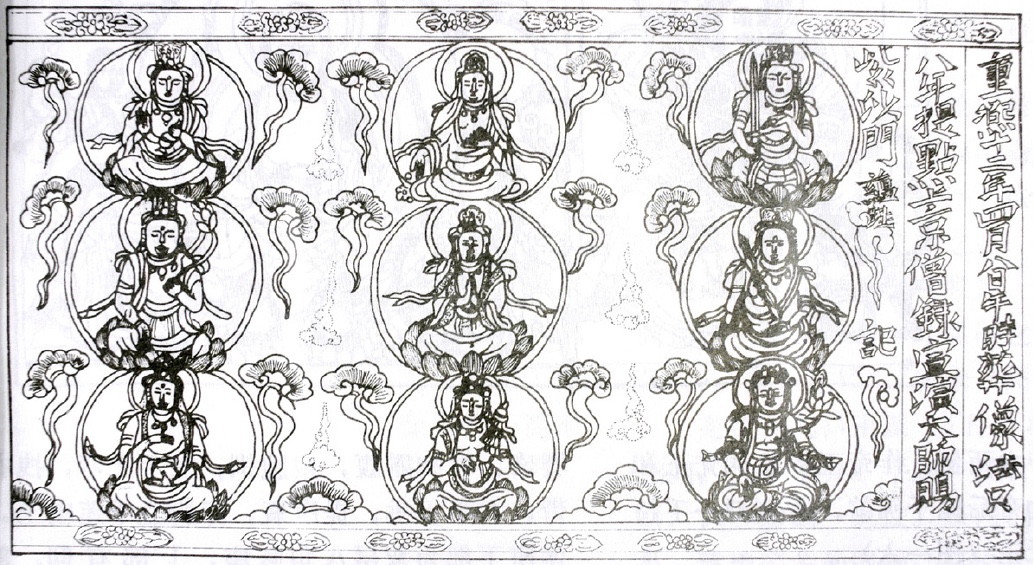
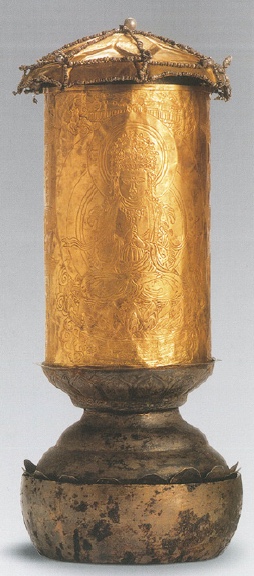
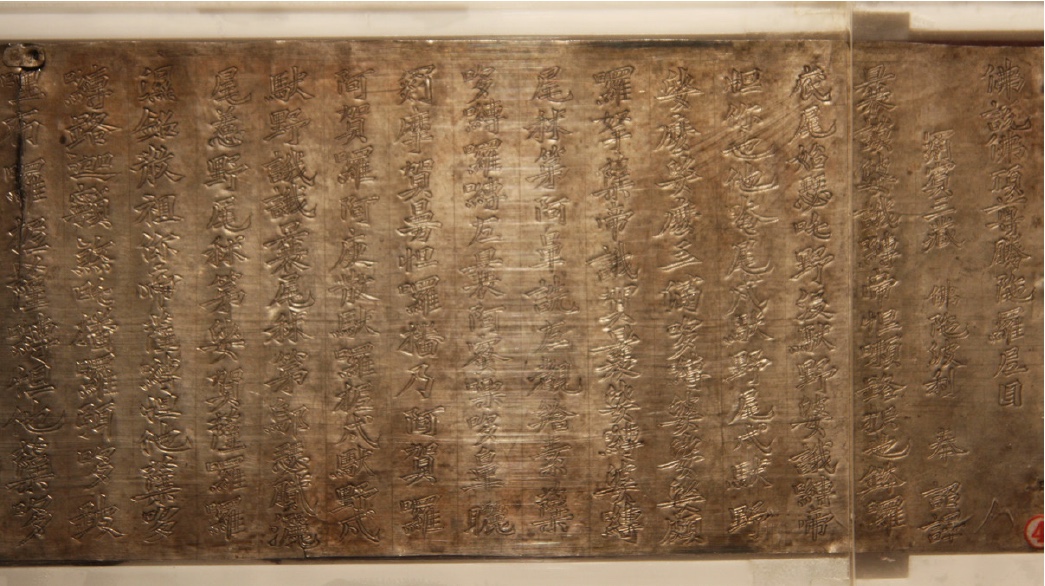
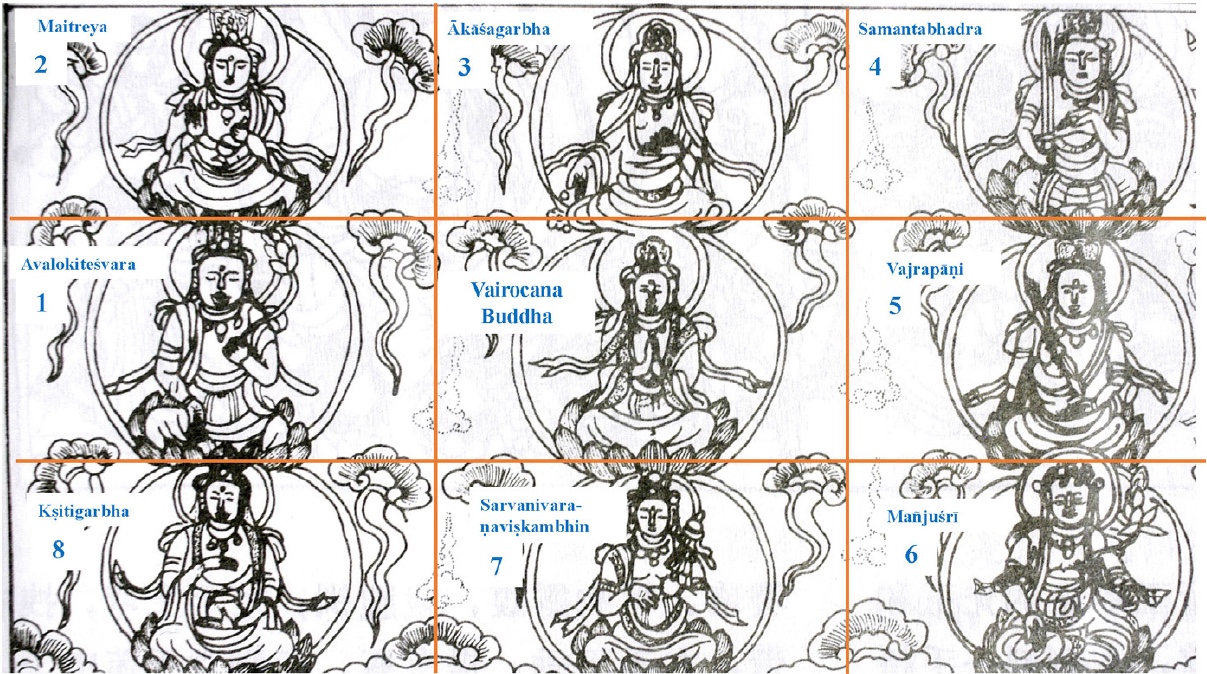
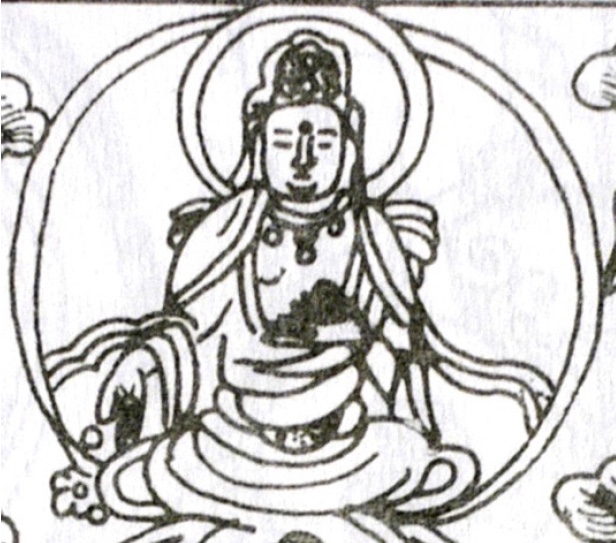
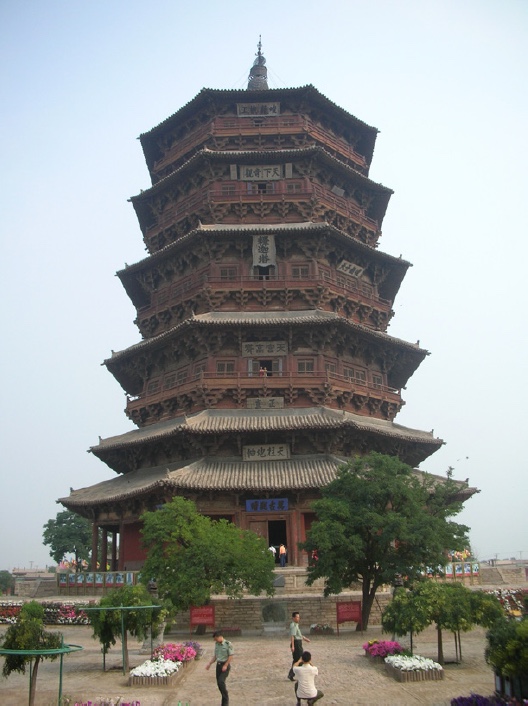
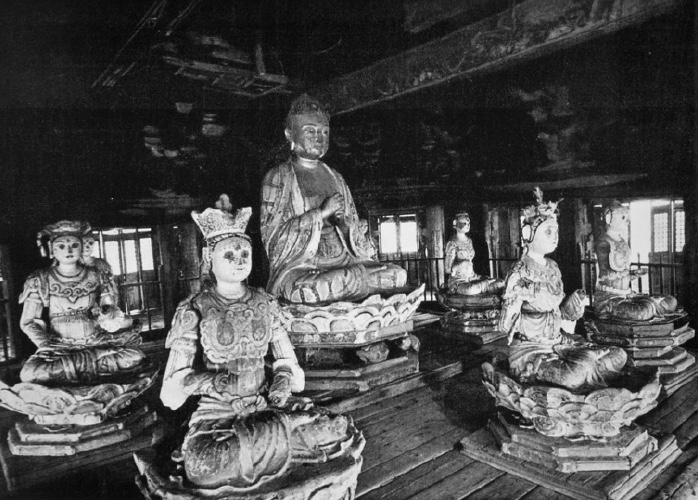
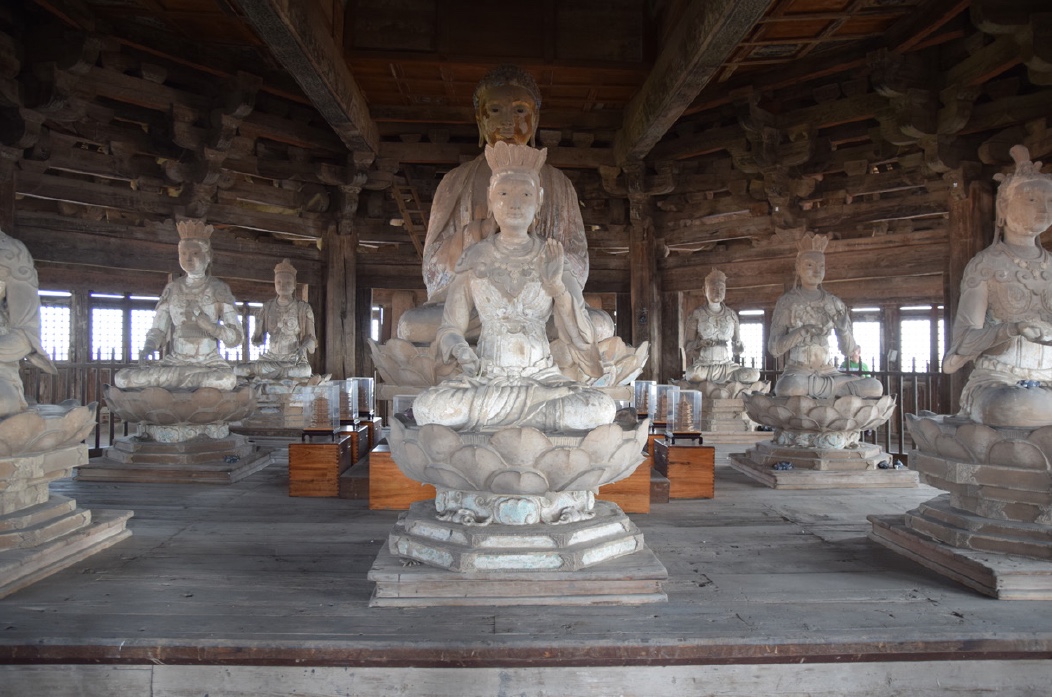
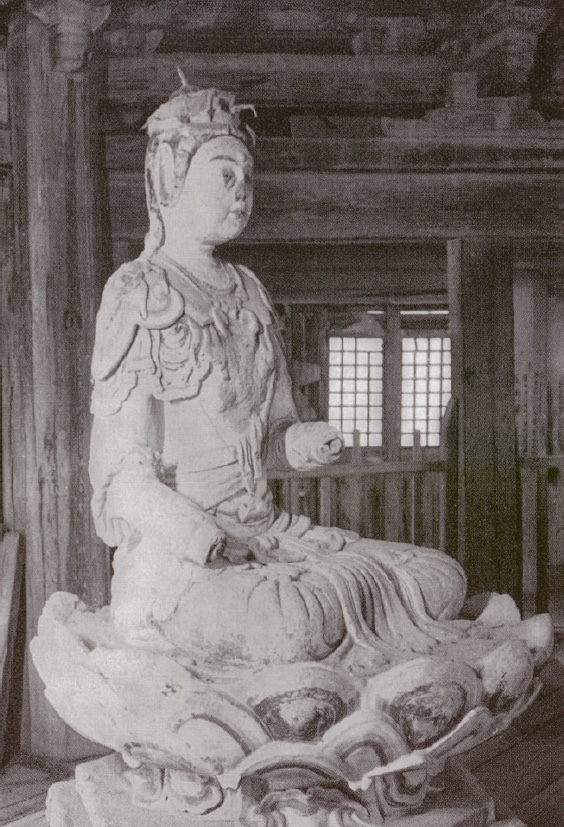
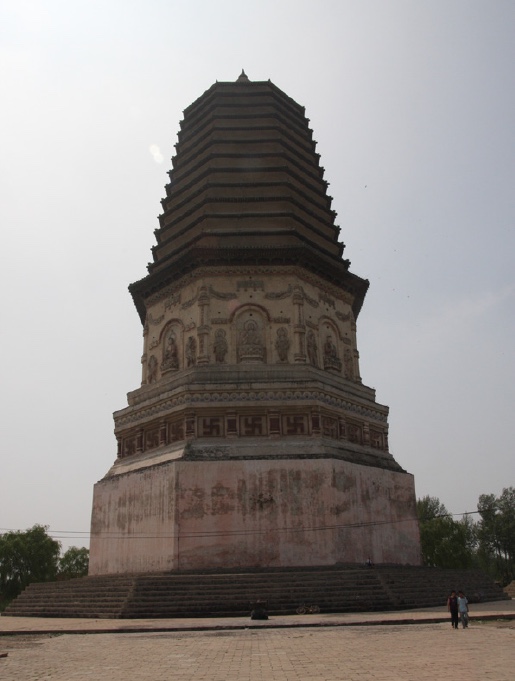
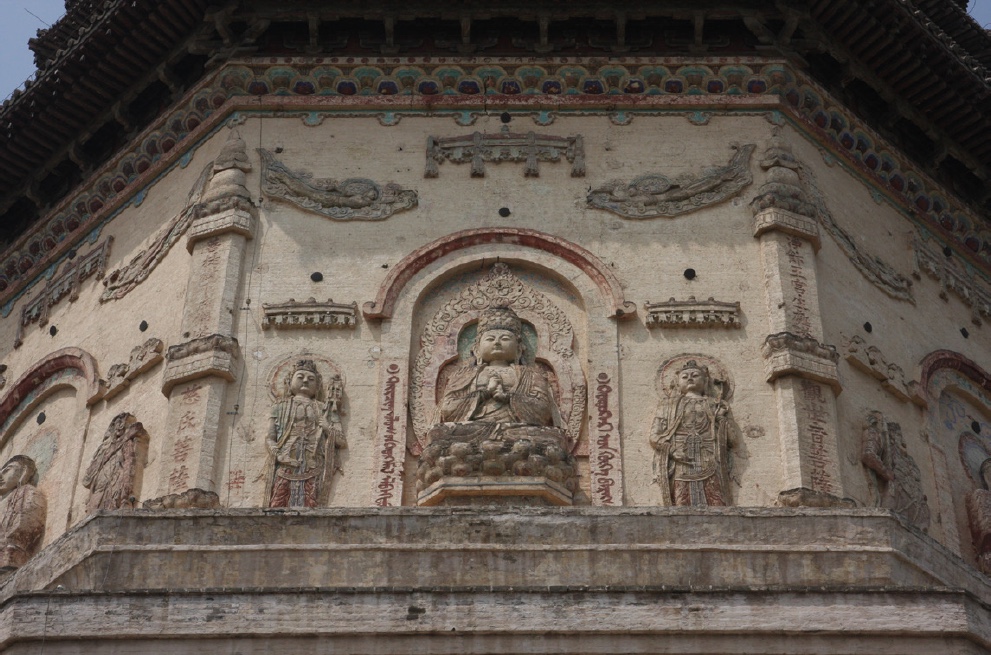
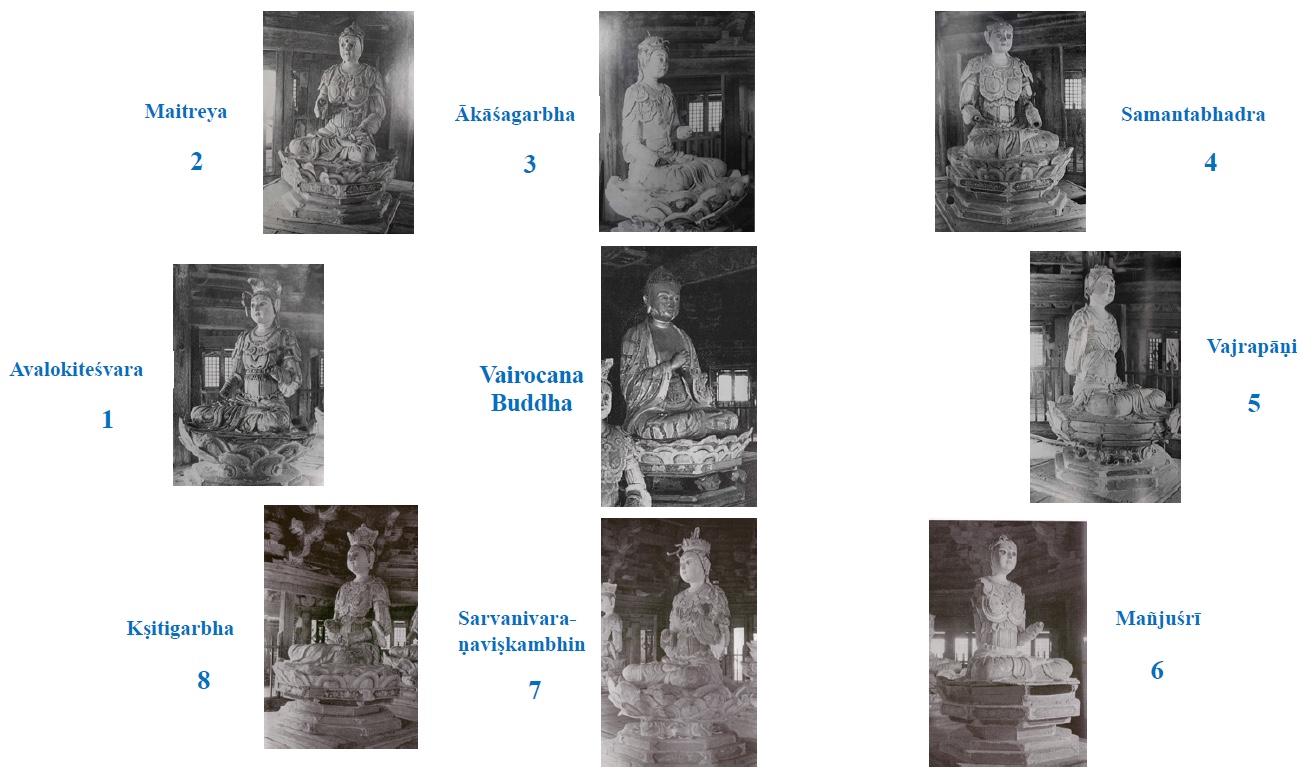
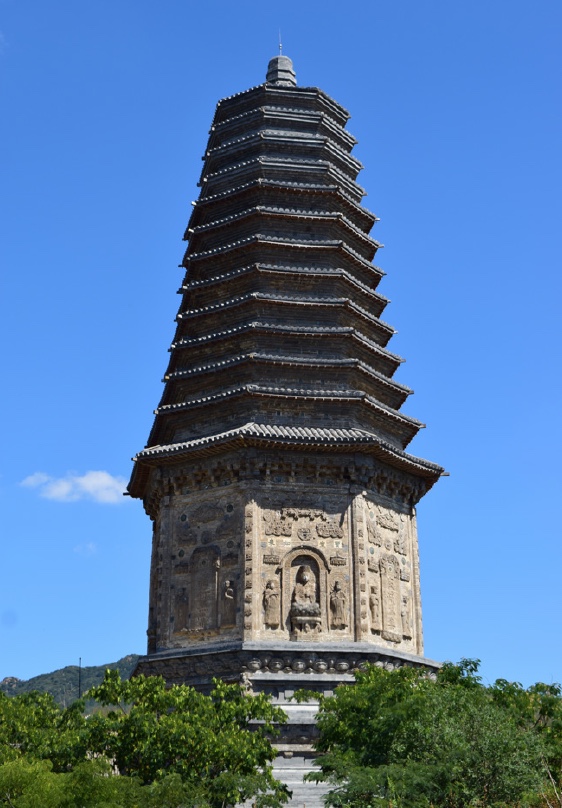
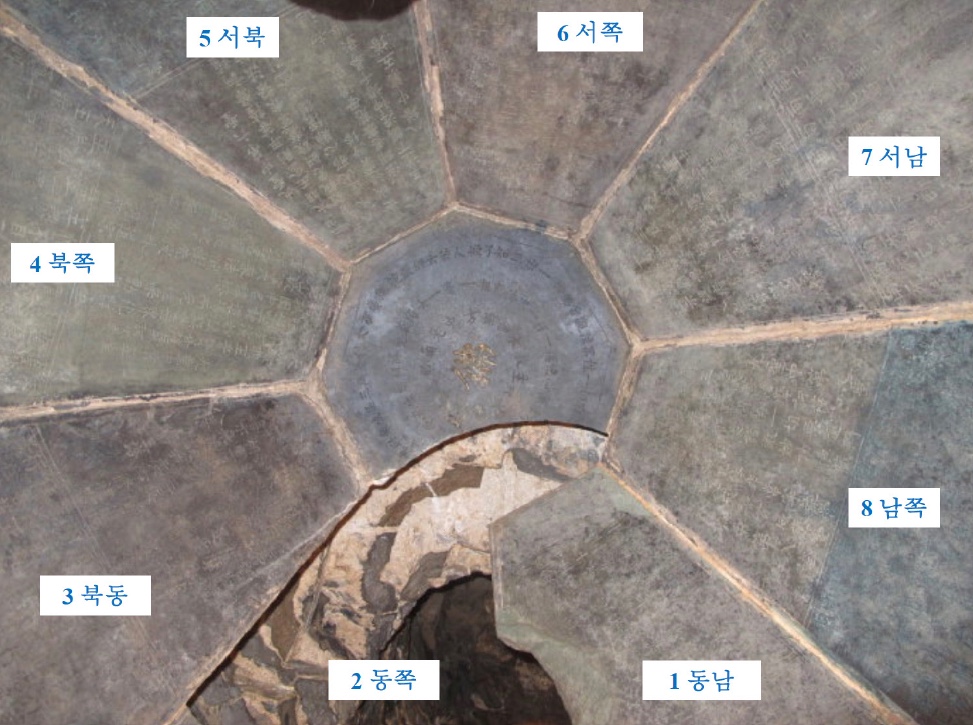
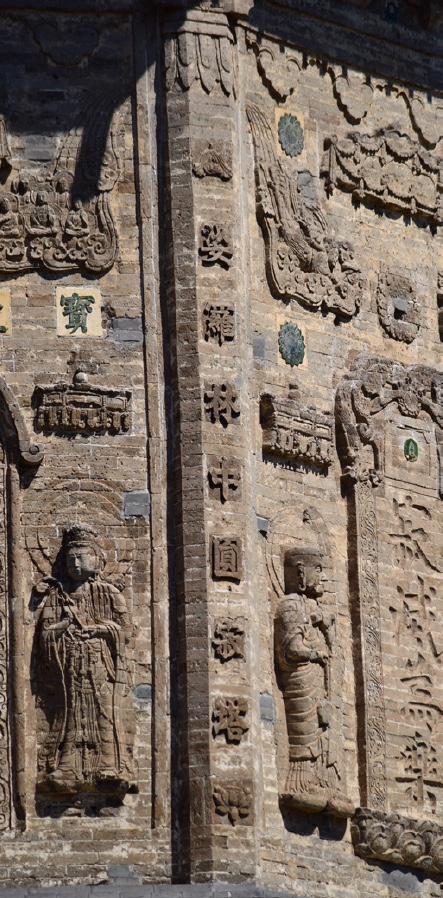
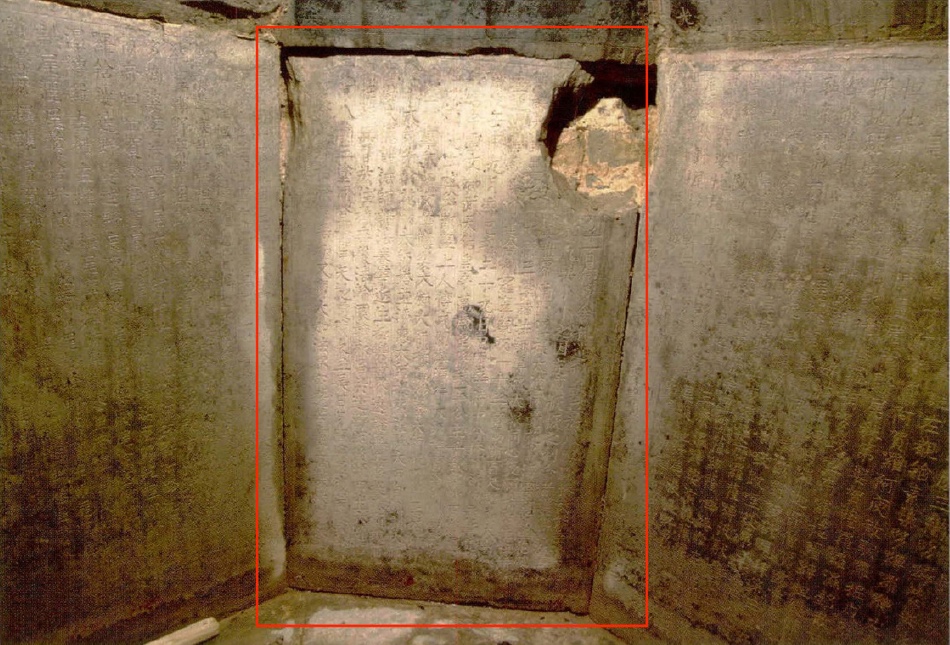
Table 1. Comparison of Attributes
| Bodhisattva names in the sutra | Sutra of the Eight Great Bodhisattvas Mandala | Gold Mandala from Chaoyang North Pagoda |
|---|---|---|
| 1. Avalokiteśvara (Guanzizai pusa 觀自在菩薩) | lotus flower | lotus flower |
| 2. Maitreya (Cishi pusa 慈氏菩薩) | bottle | bottle |
| 3. Ākāśagarbha (Xukongzang pusa 虛空藏菩薩) | jewel | jewel |
| 4. Samantabhadra (Puxian pusa 普賢菩薩) | sword | sword |
| 5. Vajrapāṇi (Jingangshou pusa 金剛手菩薩) | vajra | vajra |
| 6. Mañjuśrī (Manshushili tongzhen pusa 曼殊室利童眞菩薩) | five-branched vajra on a lotus flower | five-branched vajra on a lotus flower |
| 7. Sarvanivaraṇaviṣkambhin (Chugaizhang pusa 除蓋障菩薩) | wish-fulfilling flag | wish-fulfilling flag |
| 8. Kṣitigarbha (Dizang pusa 地藏菩薩) | bowl | bowl |
Table 2. Comparisons of the Eight Great Bodhisattvas’ Left and Right Hands
| Bodhisattvas | Sutra of the Eight Great Bodhisattvas Mandala |
Gold Mandala from Chaoyang North Pagoda |
||
|---|---|---|---|---|
| Left Hand | Right Hand | Left Hand | Right Hand | |
| 1. Avalokiteśvara | varada mudrā | lotus flower | lotus flower | varada mudrā |
| 2. Maitreya | bottle | abhaya mudrā | bottle | abhaya mudrā |
| 3. Ākāśagarbha | jewel placed in front of heart | varada mudrā sending out countless treasures | jewel placed in front of heart | varada mudrā sending out countless treasures |
| 4. Samantabhadra | varada mudrā | sword | varada mudrā | sword |
| 5. Vajrapāṇi | hand placed on groin | vajra | hand placed on groin | vajra |
| 6. Mañjuśrī | five-branched vajra on a lotus flower | varada mudrā | five-branched vajra on a lotus flower | varada mudrā |
| * appearance of a young boy with five topknots | ||||
| 7. Sarvanivaraṇaviṣkambhin | wish-fulfilling flag | varada mudrā | wish-fulfilling flag | varada mudrā |
| 8. Kṣitigarbha | bowl placed under navel | right palm facing down | bowl placed under navel | right palm facing down |
Table 3. Arm Positions of the Bodhisattvas at Yingxian Timber Pagoda and Chaoyang North Pagoda
| Bodhisattvas | Yingxian Timber Pagoda (ca. 1056) |
Chaoyang North Pagoda’s gold mandala (1043) |
||
|---|---|---|---|---|
| Left Arm | Right Arm | Left Arm | Right Arm | |
| 1. Avalokiteśvara | Lowered | Raised | Raised | Lowered |
| 2. Maitreya | Lowered | Raised | Raised | Raised |
| 3. Ākāśagarbha | Raised | Lowered | Raised | Lowered |
| 4. Samantabhadra | Lowered | Lowered | Raised | Lowered |
| 5. Vajrapāṇi | Destroyed | Raised | Lowered | Raised |
| 6. Mañjuśrī | Raised | Destroyed | Raised | Lowered |
| 7. Sarvanivaraṇaviṣkambhin | Raised | Raised | Raised | Raised |
| 8. Kṣitigarbha | Lowered | Raised | Lowered | Raised |
Table 4. Arms Position of the Bodhisattvas at Yingxian Timber Pagoda and Chaoyang North Pagoda37
| Bodhisattvas | Daming Pagoda (1098) |
Gold Mandala from Chaoyang North Pagoda (1043) |
||
|---|---|---|---|---|
| Attribute | Hand Holding the Attribute | Attribute | Hand Holding the Attribute | |
| 1. Avalokiteśvara | lotus flower | left | lotus flower | left |
| 2. Maitreya | bottle | left | bottle | left |
| 3. Ākāśagarbha | jewel | left | jewel | left |
| 4. Samantabhadra | sword | right | sword | right |
| 5. Vajrapāṇi | vajra | right | vajra | right |
| 6. Mañjuśrī | lotus flower | left | lotus flower | left |
| 7. Sarvanivaraṇaviṣkambhin | wish-fulfilling flag | left | wish-fulfilling flag | left |
| 8. Kṣitigarbha | bowl | left | bowl | left |
Table 5. Arm Positions of the Bodhisattvas at Yingxian Timber Pagoda and Daming Pagoda
| Bodhisattvas | Yingxian Timber Pagoda (ca. 1056) |
Daming Pagoda (1098) |
||
|---|---|---|---|---|
| Left Arm | Right Arm | Left Arm | Right Arm | |
| 1. Avalokiteśvara | Lowered | Raised | Raised | Lowered |
| 2. Maitreya | Lowered | Raised | Raised | Raised |
| 3. Ākāśagarbha | Raised | Lowered | Raised | Lowered |
| 4. Samantabhadra | Lowered | Lowered | Lowered | Lowered |
| 5. Vajrapāṇi | Destroyed | Raised | Lowered | Raised |
| 6. Mañjuśrī | Raised | Destroyed | Raised | Lowered |
| 7. Sarvanivaraṇaviṣkambhin | Raised | Raised | Raised | Lowered |
| 8. Kṣitigarbha | Lowered | Raised | Lowered | Raised |