

The Elegant Inkstones and Artful Calligraphy in Modern Korea: The Catalogue of Three Inkstones Studio (三硯齋硯譜, Samyŏnjae yŏnbo)
* Associate Professor, Myongji University
DOI: https://doi.org/10.31065/kjah.322.202406.003
Abstract
This study investigates The Catalogue of Three Inkstones Studio (三硯齋硯譜, Samyŏnjae yŏnbo), compiled by Pak Yŏngch’ŏl (朴榮喆, 1879~1939), a prominent Korean bureaucrat, businessman, and collector during the Japanese colonial period. The catalogue centers on three inkstones reputedly associated with notable Chinese and Korean scholars. Pak Yŏngch’ŏl, despite his modernist and enlightenment leanings, was deeply rooted in classical Chinese culture and used his collection to assert his cultural and intellectual identity.
The study examines the cultural significance of inkstones, their role in forging social ties, and the strategic utilization of the past by modern intellectuals for self-fashioning. The first inkstone is notable for its inscriptions by Dong Qichang (董其昌), Weng Fanggang (翁方綱), and Kim Chŏnghŭi (金正喜), illustrating the cultural interconnectedness between Chinese and Korean scholars. The second inkstone, crafted by the eighteenth-century scholar Chŏng Ch’ŏlcho (鄭喆祚), is explored in terms of the craftsmanship and social networking practices of the late Chosŏn era. The third inkstone features a poem by Shen Rujin (沈汝瑾) and showcases the transnational cultural exchanges between China, Korea, and Japan.
Pak Yŏngch’ŏl’s collection practices and the subsequent compilation of the catalogue reflect his efforts to align himself with the cultural heritage of both China and Korea, while also embracing modernization under Japanese influence. The catalogue not only serves as a historical compendium but also as a reimagined past that aligns with the cultural aspirations of subsequent generations. Through a detailed analysis of the inkstones and their associated texts, the study provides a micro-historical perspective on East Asian intellectual history and material culture, revealing the intricate interplay between cultural memory, networks, and craftsmanship.
Ⅰ. Introduction
This study centers around The Catalogue of Three Inkstones Studio (三硯齋硯譜, Samyŏnjaeyŏnbo) (Fig. 1) compiled by Pak Yŏngch’ŏl (朴榮喆, 1879~1939), a successful bureaucrat and businessman as well as distinguished collector and antiquarian during the Japanese colonial period.1 The three inkstones are allegedly associated with or were once purportedly owned by renowned Chinese and Korean scholars. They include the first inkstone made from red horse liver stone with inscriptions by Dong Qichang (董其昌, 1555~1636), Weng Fanggang (翁方綱, 1733~1818), and Kim Chŏnghŭi (金正喜, 1876~1856); the second, crafted by the eighteenth-century scholar Chŏng Ch ’ŏlcho (鄭喆祚, 1730~1781); and the third, adorned with a portrait of Huang Tingjian (黃庭堅, 1045~1105) by Guo Shiyun (郭士雲) and engraved callig raphy by Wu Changshou (吳昌碩, 1844~1927). The text accompanying each inkstone included encomiums, poetry, colophons, expository prose, and excerpts from historical or literary sources, which seamlessly connected erudite scholars from both China and Korea.
Pak Yŏngch’ŏl ’s method of assembling his collection— primarily through private acquisition and referrals within his intimate network—highlights the exclusivity of high-quality inkstones to a circumscribed elite. This underscores the role of social connections in the dissemination of these objects among scholars, artists, and high-ranking officials in the early twentieth century. After acquiring these precious inkstones, Pak Yŏngch’ŏl commissioned Yi Hanpok (李 漢福, 1897~1944) to depict them, adding expository texts accordingly. Along with these, he asked acquaintances to provide colophons, compiling an album of painting and calligraphy entitled The Catalogue of Three Inkstones Studio around 1936.2 The seminal parts of Pak’s text are dedicated to tracking the provenance of each inkstone, which was frequently bequeathed from a father to son as inheritance, bestowed by master upon male disciple as a token of the transmission of knowledge, or exchanged as gifts among male colleagues and friends as a symbol of camaraderie. The tradition of compiling catalogues of inkstones dates back to the Song dynasty in China (960~1279).3 Inkstones were highly appreciated among the literati, intertwined with “the culture of wen (文, writing, literature, and civility),” and often associated with the owner’s virtue and talent in literature.4 Ownership of such stones imparted not only cultural delicacy but also intellectual prominence, helping to shape or self-fashion oneself as an artful and respectable scholar and to elevate an individual into a higher societal group. In addition to commissioning the catalogue, Pak Yŏngch’ŏl’s admiration for his ink collection culminated in his decision to name his study “The Three Inkstones Studio (三硏齋, Samyŏnjae),” which also became his sobriquet.
Exploration of this catalogue provides a window into the role of antiquities in forging social ties and the strategic utilization of the past by modern intellectuals for self-fashioning. As a bureaucrat and banker hailing from a non-dominant yangban lineage, Pak Yŏngch’ŏl was anchored in the traditions exemplified by classical Chinese culture and an antiquarian ethos, yet he simultaneously championed modernization and enlightenment ideals. His adept navigation of knowledge and refined aesthetic sensibility enabled him to expand his influence and cultivate his identity as a modern elite. The valorization of cultural heritage, the veneration of a discerning civilizational lineage, and the nostalgia for an antiquarian past emerged as instrumental means to realize his ambitions. Additionally, the study reexamines inkstones and their movements within a broader social context, relying on concepts such as gifts, appropriation, and collection. In sum, this essay aims to offer a micro-historical perspective on East Asian intellectual history through the lens of inkstone culture and a case study on the transnational interaction of material culture across China, Korea, and Japan via antiquarian practices.5
Ⅱ. The Catalogue of Three Inkstones Studio: A Confluence of Art, Antiquity, and Literati Culture
The Catalogue of Three Inkstones Studio is a meticulously crafted accordion-bound volume, featuring three illustrations of inkstones by the artist Yi Hanpok.6 The inkstone depictions are accompanied by narratives from collector Pak Yŏngch’ŏl, consisting of transcribed texts from engravings by Dong Qichang, Weng Fanggang, and Kim Chŏnghŭi on page 3; Yi Yonghyu (李用休, 1708~1782) and Yi Kahwan (李家煥, 1742~1801) on pages 4 and 5; and Guo Shiyun and Wu Changshou on pages 7 and 8. Pages 9 to 12a contain brief biographies of historical figures linked to the inkstones. The remaining pages, 6 and 12b to 13, are dedicated to laudatory commentaries from various distinguished personages upon the album’s completion. The contributors were cultural and political contemporaries within Pak Yŏngch’ŏl’s social network, such as O Sech’ang (吳世昌, 1864~1953), Chŏng Pyŏngcho (鄭丙朝, 1863~1945), Song Chihŏn (宋之憲, 1872~1934), Chŏng Mancho (鄭萬朝, 1858~1936), Yi Toyŏng (李道榮, 1884~1934), Sŏ Pyŏngo (徐丙五, 1862~1935), Kim Tonhŭi (金敦熙, 1871~1937), and Kim Kyuchin (金圭鎭, 1868~1933). The catalogue opens with O Sech’ang’s calligraphy and proceeds with Yi Hanpok’s renderings on subsequent pages.
The collector, Pak Yŏngch’ŏl, was a descendant of an unsuccessful yangban aristocrat family who had ascended to a high-ranking position within the Japanese Army following Korea’s annexation by Japan. Following the conclusion of his military service, Pak occupied various governmental roles, such as county magistrate of Iksan (益山) and governor of Kangwŏn (江原道) and Hamgyŏng Provinces (咸鏡道), ultimately emerging as a distinguished businessman and banker. Pak’s formative education in classical Chinese texts instilled in him a profound respect for Chinese literature.7 His endorsement of Japan’s Civilization and Enlightenment (文明開化, J. Bummei-kaika) movement, and appointment to the Central Advisory Council (中樞院, Ch’ungch’uwŏn) in 1933, ref lect his alignment with Japanese policies.8 These orientations toward China and Japan aside, Pak also harbored a profound passion for Korean antiquities and amassed a significant art collection.9 Posthumously, Pak ’s extensive collection was bequeathed to Keijo Imperial University, as encapsulated in the Exhibition Catalog of Calligraphy and Paintings Donated by the Late Mr. Park Yŏngch’ŏl (故朴榮喆氏 寄贈書畵類展觀目錄).10 Among the bequeathed items was a red silk-patterned inkstone (紅絲硯, hongsa yŏn) (Fig. 2) bestowed to General Kim Ŭngha (金應河, 1580~1619) from the Ming emperor to commemorate Kim’s contribution in the battle against the Late Jin forces in 1618.11
Inkstones transcended their utilitarian role in writing to become esteemed collectibles, family heirlooms, and markers of literati culture. Their significance was further extended by the encomiums they bore that allowed them to serve commemorative functions akin to steles. From the Han dynasty onward, the demand for inkstones spurred quarrying activities to meet the needs of a burgeoning market. The Tang and Song dynasties witnessed a renaissance of inkstone craftsmanship, mirroring the flourishing literati culture.12 Specialized texts like Mi Fu’s Account of Inkstones (硯史, Yanshi) emerged, accentuating the inkstone’s cultural reverence.13 By the early eighteenth century, the Qing emperors distributed Songhua inkstones—quarried in Liaoning, Jilin, and Heilongjiang, and Manchuria, the heart of the Qing imperial homeland—as gifts, signifying their connection to the heritage of Han Chinese civilization.14
To commemorate his acquisition of the three precious inkstones, Pak Yŏngch’ŏl called his study, “The Three Inkstones Studies” and eloquently documented his collection through both visual and descriptive formats. Such veneration for inkstones was not uncommon among the literati of China and Chosŏn, who often honored these artifacts within their studio name or sobriquet, as demonstrated by Li Rihua (李日華, 1565~1635), the Ming artist and collector known as “Six Inkstones Studio (六硏齋);” Jin Nong (金農, 1687~1773), the Qing painter and calligrapher referred to as the “Wealthy Old Man of 120 Inkstones (百二硯田富翁);” and Cho Hŭiryong (趙熙龍, 1789~1866), the Chosŏn painter who adopted the name “Cottage of 102 Inkstones (百二硯田田廬).” In this esteemed tradition, Yun Chŏnghyŏn (尹定鉉, 1793~1874), a minister during King Hŏnjong’s (憲宗, r. 1834~1849) reign, shared the studio name, “Samyŏnjae (三硏齋).”15 Following his acquisition of three inkstones previously owned by the monarch, Yun displayed these treasures in his study, henceforth adopting the name Samyŏnjae.16 These inkstones, although lost to time, were once revered in connection with Han and Yuan antiquities and were reminiscent of the legendary gathering at the Orchid Pavilion by Wang Xizhi (王羲之, 303~361), traditionally referred to as the sage of calligraphy from the Eastern Jin period.
Ⅲ. Inkstones: Cultural Memory, Networks, and Craftsmanship
1. The First Inkstone: Legacy of Cultural Luminaries
This essay offers a close reading of the catalog, one section at a time, which amounts to one inkstone at a time, carefully considering the themes of cultural memory, East Asian interregional networks, and craftsmanship as they develop over the album. The first page of Pak’s album (Fig. 3) presents excerpts from the “Xiaoya (小雅)” section of the Book of Songs (詩經, Shijing), featuring the verse “Like rivers flows (如川方至)” and from the “Shang Song (商頌)” with the phrase “Having received blessing bestowed from the heavens (自天降康).”17 The inscription at the page’s bottom right, “seventy three years of Pyŏngja (七十三丙子年),” indicates that O Sech’ang penned this piece in 1936 at the age of seventy-three.18 O Sech’ang, a son of O Kyŏngsŏk (吳慶錫, 1831~1879), a late Chosŏn translator and vanguard of enlightenment thought, was a distinguished calligrapher influenced by philology and epigraphy through his father and Kim Chŏnghŭi’s disciple, Yi Sangchŏk (李尙迪, 1804~1865). He was also an astute art connoisseur and collector, mentoring leading collectors such as Pak Yŏngch’ŏl, Chŏn Hyŏngp’il (全鎣弼, 1906~1962), and O Pongpin (吳鳳彬, 1893~?).19 Renowned for his innovative fusion of seal and clerical scripts and his application of archaic motifs such as old roof tiles, coins, and oracle bones into his calligraphy, O Sech’ang achieved singular artistic acclaim.20
The first inkstone (Fig. 4) is distinguished by its rounded corners and pronounced relief of dragons amidst swirling clouds carved at the forehead of the inkstone. A thin lip encircles the ink pool, and the inkstone itself exhibits a slender profile. Its design and decoration bear a striking resemblance to the Luminous Dragons Inkstone (Fig. 5) by Liu Yuan (劉源) in 1679, which is catalogued in the Imperially Endorsed Catalogue of Inkstones from the Chamber of Western Purity (欽定西淸硯譜, Qinding Xiqing Yanpu).21 Subsequent to the depiction, Pak Yŏngch’ŏl investigates the social life of the inkstone by examining its three inscriptions by Dong Qichang, Weng Fanggang, and Kim Chŏnghŭi (Fig. 6). Pak’s examination of the engraved encomiums not only highlights the authenticity of the artifacts but also traces the lineage of epigraphic study from China. Pak first points out Dong Qichang’s laudatory poem etched on the inkstone’s reverse. This poem, rich in cultural resonance, enumerates four renowned stones for ink making: the Horse Liver stone (馬肝石, Magan shi), Phoenix Beak stone (鳳咮石, Fengzhou shi), Qiu Pool stone (仇 池石, Qiuchi shi), and Bei Mountain stone (貝山石, Beishan shi).22 Each stone was associated with illustrious Northern Song scholars such as Su Shi (蘇軾, 1036~1101) and Mi Fu, noted for their fondness of Qiu Pool and Bei Mountain stones, respectively. Both Su Shi and Mi Fu are celebrated for their profound theoretical and practical expertise in inkstone-making and for being distinguished aficionados of inkstones.23 Su Shi’s particular predilection for the Fengzhou stone is evidenced by his work, “Inscription for the Phoenix Beak Inkstone.”24 Mi Fu’s Account of Inkstones is esteemed as a seminal work in the realm of inkstone connoisseurship, exerting influence well into the nineteenth century.25 Dong Qichang’s inscription concludes by underscoring the spiritual essence of inkstones, positing their tranquility and serenity as life-prolonging for their owners.26
Following Dong Qichang’s commentary, Pak Yŏngch’ŏl introduces an inscription by Weng Fanggang on the inkstone’s surface, which poetically queries, “Is it tile or eave tile? How ancient its quality, yet its nature is firm.”27 Pak then references Kim Chŏnghŭi, whose inscription on the inkstone states, “Quiet yet steadfast, its life shall be eternal.”28 Kim Chŏnghŭi, an illustrious Chosŏn scholar, calligrapher, and epigrapher of the nineteenth century, maintained profound scholarly connections with notable Qing-era scholars such as Weng Fanggang and Ruan Yuan (阮元, 1764~1849), both distinguished for their contributions to epigraphy and philology.29 Kim Chŏnghŭi visited Beijing in 1809 as an assistant officer to a diplomat, through his father Kim Nokyŏng (金魯敬, 1766~1837). During this visit, Kim met with leading scholars of the Qing dynasty. Through continuous exchanges with them, Kim Chŏnghŭi was able to expand his knowledge of Qing evidential learning and epigraphical studies.30 The pursuit of “evidential scholarship” was galvanized among nineteenth-century Chosŏn literati, leading to a voracious hunt for archaic scripts carved on stone steles and bronze vessels.
The three inscriptions on the inkstone metaphorically juxtapose the inkstone’s permanence and serenity with the integrity and rectitude of its creators and owners. These texts ascribe value to the inkstone by reflecting on the interplay between the materiality of the stone and the renown of its earlier owners alongside their personal experiences and emotions. The act of inscription is one of the most powerful and enduring bonds an individual can establish with these artifacts. Such inscriptions necessitate an erudite comprehension of the history of calligraphic scripts and proficiency in epigraphic scholarship in later generations.31 Pak Yŏngch’ŏl extolled the material qualities of the inkstone now in his hands and its extraordinary history, connecting them to legendary, highly esteemed cultural giants and aficionados of inkstones, and recalled the tradition of collecting and appreciating inkstones by literati across different times and locations.
The remaining text explains the movement of the inkstone. Once treasured by Kim Chŏnghŭi, it was gifted to Min Yŏnghwan (閔泳煥, 1861~1905) by Kim Hanche (金翰濟), the grandson of Kim Chŏnghŭi. Min Yŏnghwan, a prominent official during the Korean Empire and patriot, who strongly advocated for Korean independence and modernization, revered the inkstone profoundly. Following Min’s untimely death, the inkstone passed to Kim Yŏnghan (金榮漢), a pro-Japanese bureaucrat and councilor of the Central Advisory Council during the Government-General of Korea. Posthumously, the inkstone entered the collection of Pak Yŏngch’ŏl.32 The inkstone constantly moved and reshaped as it was exchanged among different owners, traveled to various places, and broadened the interconnected networks of knowledge of which they simultaneously constituted a part.
2. The Second Inkstone: Craftsmanship and Obsession
The investigation of the second inkstone (Fig. 7) revolves around three pivotal issues embedded in the making, collecting, and circulating of inkstones in the late Chosŏn era: the concept of the scholar-artisan, the changing perception of craftsmanship in favor of aesthetic of ‘obsession (癖) and foolishness (癡)’ among literati, and the gift-exchange practice as a means of social networking and forging intellectual lineage.33 The second inkstone is rectangular with deep water and rounded ink pools. Despite its rectangular shape, the inkstone conveys a sense of softness through its curvilinear upper contours. There are inscriptions on the forehead and the left edge of the inkstone, but the characters are unclear and difficult to decipher. However, Pak Yŏngch’ŏl’s transcriptions in the accompanying text preserve the writings of prior owners Yi Yonghyu and his son, Yi Kahwan (Fig. 8). Yi Yonghyu, an eighteenth-century scholar, epitomized openness and erudition, embracing diverse philosophies such as the Yangming School (陽明學, Yangmyŏnghak) and Western Learning (西學, Sŏhak). He was involved in Practical Learning (實學, Sirhak), delving deeply into practical disciplines, such as astronomy, geography, and agriculture. Like his father, Yi Kahwan continued this intellectual lineage as a pivotal figure in the Sirhak movement of the Southern Faction (南人, Namin) and an advocate of Western Learning.
The short encomiums by Yi Yonghyu and Yi Kahwan praise the scholar-artisan Chŏng Ch’ŏlcho, highlighting his pursuit of technical innovation and empirical knowledge. These writings emphasize the inkstone’s creator over its material quality or the repute of its former owners. Yi Yonghyu’s encomium alludes to a profound personal connection to the craft: “The hands forget writing, the eyes forget paintings. Why choose the stone? Foolishness and obsession reign supreme,” and, “This is the inkstone made by Chŏng Ch’ŏlcho; may it be cherished through generations.”34 This sentiment reflects the values of a group of scholars who, advocating for practical and progressive approaches, were receptive to novel insights and advanced knowledge and technologies from Qing China and the West, and open-minded to social reform and economical development. Among the intellectuals in the eighteenth century, various pastimes once deemed unbecoming for gentlemen such as collecting and appreciating painting and calligraphy, gardening, reading, traveling to famous mountains, and tea ceremonies gained popularity, indicating an emerging new cultural trend. These phenomena were often defined by the concept of “obsession and foolishness,” by the School of Northern Learning (北學派, Puk’akp’a) at the forefront.35 Inkstones, quintessential objects for Confucian scholars, were typically crafted by artisans since their creation involved manual labor, which was traditionally beneath the dignity of a scholar. Nonetheless, the fact that Chŏng Ch’ŏlcho, a government official and skilled carver, gained recognition for his artisanal prowess ref lects a changing perception of craftsmanship.36 However, these changes neither proposed a meritocracy over hereditary entitlement nor introduced professionalism equivalent to the modern concept of craftsmanship that transcended class hierarchies. Instead, they stemmed from the late Chosŏn period’s cultural ethos, which valued obsession and foolishness. Contemporary scholars praised the exceptional skill of Chŏng Ch’ŏlcho as an inkstone artisan, often referring to his work as a manifestation of the intellectual pursuit of obsession and foolishness. Despite these limitations, the material qualities and techniques were well acknowledged, along with the intricate craftsmanship and artistic excellence in Chŏng Ch’ŏlcho creations.
Chŏng Ch’ŏlcho, also known by his sobriquet Sŏkch’i (石痴, Obsessed with Stone), descended from a yangban aristocratic family and maintained ties with the preeminent scholars of the School of Northern Learning, including Pak Chiwŏn (朴趾源, 1737~1805) and Hong Taeyong (洪大容, 1731~1783). He was adept at creating mechanical devices and was also skilled in painting and cartography.37 Among the various talents of Chŏng Ch’ŏlcho, his fame as an inkstone maker stands out. His skill in making inkstones is well captured in Yi Kyusang’s Records of Talented Gentlemen of the Age (幷世才彦錄, Pyŏngse chaeŏllok), which attests to his natural talent and the spontaneous nature of his work:
“He painted bamboo with stone and landscapes well, and had obsession for carving inkstones. Normally, carvers have knives and awls, called carving tools, but he just used his carried knife, and it was as if he were carving wax. He didn’t discriminate against the type of stone. Whenever he saw one, he would immediately carve it, finishing in a moment. He would pile them up on his desk and give them away without a word if asked.”38
Yu Tŭkkong (柳得恭, 1748~1807), a renowned inkstone connoisseur, describes the value of inkstones by Chŏng Ch’ŏlcho as follows: “The dull artisans of Samhan (三韓, Korea) are incomparably stupid; the whole country uses feng-shaped inkstone (風字硯, pung-cha yŏn). Recently, there is a famous man named Sŏkch’i who enjoys carving autumn chrysanthemums and crickets.”39 Yu Tŭkkong aptly points out Chŏng Ch’ŏlcho’s innovative qualities in inkstone-making. While everyone else was using the obsolete type of inkstone, he carved ingenious designs such as chrysanthemums and insects like crickets. This attests to the authenticity and ingenuity of Chŏng Ch’ŏlcho. Sim Nosung’s (沈魯崇, 1762~1837) “Short Essay on Chŏng Ch’ŏlcho’s Inkstone (鄭石癡硯小識)” reflects on the cultural cachet of owning a Sŏkch’i inkstone, which was a matter of prestige among the educated elite. Sim states, “The inkstone of Sŏkch’i had a significant reputation in recent times. Learned people of the cultural milieu of the time were ashamed of not possessing one. I too had one in my youth but lost it during a move, which I deeply regretted.” The narration also recounts Chŏng Ch’ŏlcho’s inkstone owned by Kang Imun (姜彛文), which was gifted to his grandfather Kang Sehwang (姜世晃, 1712~1791) as a courtesy in return for request of calligraphy. Kang Sehwang highly appreciated it by praising it as the best among thousands seen by him. The laudatory words inscribed on the inkstones and the accolades expressed in poetry amplify the legacy of Chŏng Ch’ŏlcho’s inkstones as embodiments of artisanal excellence.40
While several existing works are attributed to Chŏng Ch’ŏlcho, none have been identified as his work for certain. This painting of Chŏng Ch’ŏlcho’s inkstone by Yi Hanpok still exists as shown in this catalogue, and may be as close as we can come to seeing the authentic inkstone.41 This inkstone originated as a token of affection from Chŏng Ch’ŏlcho to his in-law, Yi Yonghyu, whose son later wed Chŏng Ch’ŏlcho’s younger sister. Following Yi Yonghyu’s lines, the inscription by Yi Kahwan says that “the Dragon Liver Stone (龍肝石, Longgan shi) from Andong, the younger brother’s rounded jade and the elder’s azure disk emit a secluded light. A single piece emulates the moon’s soul; its delicate skin nourishes with the essence of clouds for a thousand years.”42 It was a cliché of scholars to compare an inkstone to a jade with smooth surface. Furthermore, the inkstone bears an additional inscription comprising twelve characters, and its corners are adorned with imagery. This inscription not only comments on the inkstone’s aesthetic attributes but also lauds the consummate artisanship of Chŏng Ch’ŏlcho. His craftsmanship is held in such high regard that it is deemed irreplaceable, “not to be traded even for a hundred chariots.”43 Chŏng Ch’ŏlcho’s prolific output as an inkstone carver, fulfilling both commissioned works and personal projects, illustrates his deep engagement with the craft. An examination of Chŏng Ch’ŏlcho’s life reveals him as an example of the scholar-artisan, a concept articulated by historian Dorothy Ko.44 In merging scholarly pursuit with manual dexterity, Chŏng Ch’ŏlcho’s legacy offers a vivid portrait of the intellectual and artistic vibrancy of his time.
3. The Third Inkstone: Transcultural Networks in Modern East Asia
The inkstones appearing on page 7 (Fig. 9) have intricate details, along with Shen Rujin’s (沈汝瑾, 1858~1917) poem written by the hand of the calligrapher Wu Changshou. The examination of these texts highlights the cultural and intellectual legacy embodied by the inkstone through its association with notable historical figures like Huang Tingjian and Fan Pang (范 滂, 137~169). It delves into the provenance of the inkstone, unveiling its journey through various hands, including Wu Changshuo, Taguchi Beihō (田口米舫, 1861~1930), and Pak Yŏngch’ŏl. The provenance of this inkstone presents shared antiquarian interests and artistic practices that were intensely transcultural as well as the collaboration among scholars and artists from China, Korean, and Japan in the circulation of the artifacts and the shared intellectual history, artistic practice, and aesthetic values.
The third inkstone is characterized by its substantial, rectangular form with a slender border. Engraved upon it is a poem by Shen Rujin, a late Qing-era connoisseur of inkstones and author of the Catalogue of Shiyou’s Inkstones (石友硯譜, Shiyou yanpu), rendered in the calligraphy of Wu Changshou. It reads as:
“Ranked among the political party members, and (his) portrait is engraved in the inkstones of Duan stone (端溪硯, Duanxi yan). Passing through eons, joy remains unworn; the true face of Mount Lu (廬山, Lu Shan) is acknowledged. Reading Record of the Grand Historian (史記, Shiji) facing the green mountains, once again I transcribe the ‘Biography of Fan Pang’ (范滂傳, Fan Pang dian). Of the endless number of ancients to take to heart, there is only Huang Tingjian.”45
Adjacent to this, another of Shen Rujin’s verses invokes the memory of scholars from the past as Shen expresses, “the literary works stand along as the emblem of all things; its face forever remains in a piece of stone. How could we get the reborn Guo Shiyun, and once again have him paint the images of Su Shi along with Huang Tingjian.”46 According to Pak’s explanation, the backside of the inkstone has the engraved portraiture of Huang Tingjian by Guo Shiyun.
The narrative surrounding the inkstone offered by these two inscriptions evokes the figures of Huang Tingjian and Fan Pang, renowned for their principled reclusiveness. Fan Pang was an official during the Eastern Han (東漢, 25 CE~220 CE) dynasty, noted for his integrity in exposing corrupt officials and impeaching them without regard to their high status. However, disillusioned by the corrupt political circumstances of the time, he resigned and returned to his hometown. Similarly, Huang Tingjian, finding parallels in Fan Pang’s story during his own exile to Yizhou (宜州), was prompted to transcribe the “Biography of Fan Fang” from the Book of the Later Han (後漢書, Hou Hanshu) at Yu Ruo’s (余若) behest, encapsulating a shared experience of integrity amid political turmoil. Following Shen Rujin’s poem is his account of acquiring the inkstone, once valued by Wu Changshuo and subsequently given to the Japanese calligrapher Taguchi Beihō, a student of Wu Changshuo.47 Upon Taguchi Beihō’s death, the inkstone entered Pak Yŏngch’ŏl’s collection through the intermediation of Yi Hanpok, who had a close relationship with Taguchi Beihō during his studies in Japan.48
Ⅳ. Collecting Art and Revealing Taste: Shaping the Identity of Modern Intellectuals in the Japanese Colonial Era
From pages 9 through 12a (Figs. 10~14), Pak Yŏngch’ŏl’s expository texts detail the biographies of the historical figures associated with each inkstone. In this section, Pak Yŏngch’ŏl surveys six figures related to each inkstone; the four previous owners Dong Qichang, Weng Fanggang, Kim Chŏnghŭi, and Yi Yonghyu; an inkstone carver Chŏng Ch’ŏlcho; and the posterity of the owner who might inherit the inkstone, Yi Kahwan. This narrative includes a brief biography of the historical figures associated with each inkstone, their cultural achievements and reputations as scholars and artists, with the addition of the author’s short commentary and evaluation of the individuals. A close reading of Pak’s text reveals the empirical approaches of intellectuals and antiquarian’s aspirations in modern Korea and sheds light on the manner in which the Chinese past is recontextualized and integrated within modern Korean culture. Through this, Pak avidly represents both a historical compendium and a reimagined past, tailored to the cultural aspirations of subsequent generations.
The narrative surrounding the first inkstone venerates individuals such as Dong Qichang, Weng Fanggang, and Kim Chŏnghŭi for their contributions to officialdom and their reputations as calligraphers and scholars. Weng Fanggang’s avid collecting of ancient art and documents, amounting to a staggering 80,000 pieces housed in his “House of Stone and Ink (石墨書樓, Shimo shulou),” provided fertile ground for Kim’s scholarly pursuits. In admiration of his mentor Weng Fanggang, Kim Chŏnghŭi took one character from each of Wen’s sobriquets, Posojae (寶蘇 齋) and Tamgye (覃溪) to create his own style name Podamjae (寶覃齋). Pak Yŏngch’ŏl highly esteemed Kim Chŏnghŭi, stating that Kim was an outstanding scholar in the reign of King Hŏnjong (憲宗, r. 1834~1849), with abundant and extensive knowledge, whose prose was extraordinary and strict. Moreover, he was well-versed in the studies of epigraphy, and his calligraphy achieved a rare level of excellence that had not existed before in the world.49
The second inkstone is associated with its former owner Yi Yonghyu, his son Yi Kahwan, and the inkstone maker Chŏng Ch’ŏlcho. Pak Yŏngch’ŏl laments Yi Yonghyu’s political misfortune, having been marginalized as a member of the Southern Faction. Yi Kahwan, a man of letters during King Chŏngjo’s (正祖, 1752~1800) reign, met an untimely end during the Sin’yu Persecution (辛酉迫害, Sinyu pak’ae), a massive crackdown on Catholicism in Chosŏn in 1801. In the Chosŏn dynasty, the names of inkstone carvers are rarely known. However, Chŏng Ch’ŏlcho, a scholar-official of the eighteenth century, was an exception; despite his high social status of yangban aristocrat, he was also well known for carving inkstones himself.
Pak Yŏngch’ŏl’s last remark centers around Wu Changshou, a calligrapher, a painter of the Shanghai School, and a seal carver of the late Qing period. Pak Yŏngch’ŏl praised him by stating, “He began studying poetry at thirty, started painting at fifty. His contemporaries acclaimed him for his study of seal script, considering his skill to surpass that of Qin and Han dynasty.”50 Pak’s writings on inkstone is a composite in which hearsay, quotations from historical and fictional accounts, and eulogies of historical figures and their moral virtues mix.
The remainder of this catalogue consists of colophons by influential contemporaries of Pak Yŏngch’ŏl, including high officials, artists, and collectors. On the sixth page (Fig. 15) are the inscriptions by Yi Uyŏng (李雨榮) and Pak P’ungsŏ (朴豊緖). Yi ’s commentary, “contemplating to cultivate oneself through tranquility, just like the inkstone, one will live a long life,” draws an analogy between the enduring nature of the inkstone and the human aspiration for a prolonged existence.51 Pak P’ungsŏ’s remark, “because it cannot be sharp, it uses dullness for its body, and because it cannot move, it uses stillness for its purpose. If one considers how the inkstone becomes so, it is for such reasons that it can became eternal,” offers a metaphorical appreciation for the inkstone’s physical attributes as emblematic of lasting value.52 In the last pages of his catalogue, Pak Yŏngch’ŏl subtly crafts a narrative that situates the act of collecting and appreciating inkstones as central to the identity of the modern Korean male elite.53 This section reveals the correlation between art collection and social stature, revealing the complex interplay between the identities of emergent intellectuals and their expansive social networks across time and the cultures of Qing China and Chosŏn Korea.54
As elucidated in Craig Clunas’s inspiring study of the role of taste manuals in defining the identities of elite men during the late Ming dynasty, this catalogue served a similar function in early twentieth-century Korea.55 Writing served as a critical means of self-expression, fostering connections with like-minded individuals while bridging past and present. Their antiquarian attitude, shared cultural preference, and connoisseurial knowledge brought people together to promote social gatherings and literary activities in which only elites with knowledge of tradition participated. In this manner, in the early twentieth century, the inkstone as a material culture was appropriated by new elites to emphasize their newfound social importance, wealth, and cultural elegance. The catalogue functions as a celebration of a social group whose members perceive themselves as cultural and artistic connoisseurs, distinguished by their knowledge and discernment. It documents the personal eccentricities, the intricate social networks forged through the circulation of inkstones, and the societal rituals surrounding their collection. Among these rituals, Pak Yŏngch’ŏl and his contemporaries engaged in viewing collections, naming inkstones, inscribing encomiums, and exchanging antiquities, thereby reinforcing elite male sociability and the competitive acquisition of artworks.
Following the album’s completion, Pak Yŏngch’ŏl garnered encomiums from eminent figures within his network. Requests from nine individuals in the early 1930s included Chŏng Pyŏngcho (鄭 丙朝, 1863~1945) and Song chihŏn (宋之憲, 1872~1934), followed by Chŏng Mancho, Yi Toyŏng (李 道榮, 1884~1933), Sŏ Pyŏngo (徐丙五, 1862~1935), Yi Pŏmse (李範世, 1874~1940), Kim Tonhŭi (金 敦熙, 1871~1937), O Sech’ang, and Kim Kyuchin (金圭鎭, 1868~1933). It culminated in a compilation of commendations and poetry from renowned calligraphers and painters, as well as pro-Japanese bureaucrats and scholars affiliated with the Enlightenment Party (開化派, Kaehwap’a). Chŏng Mancho, a member of the Chosŏn History Compilation Committee (朝鮮史編修會, Chosŏnsa p’yŏnsuhoe) and a pro-Japanese bureaucrat, penned a direct homage to Pak Yŏngch’ŏl’s inkstone collection, lauding his astute acquisitive abilities.56 In the final page of the album (Fig. 16), there are colophons written in various calligraphic styles including seal script, clerical script, and running script, all reciting the significance of the three precious inkstones and Pak’s serendipity in attaining such masterpieces.57 These inscriptions underscore the cultural prestige and elegance associated with Pak’s collection, reflecting his elevated social significance, affluence, and cultural sophistication.
Pak Yŏngch’ŏl orchestrated the creation of his catalogue not merely as a record of his collection but as a strategic tool to emphasize the value of his acquisitions and leverage his extensive private network. The contributors to the catalogue’s colophons and inscriptions predominantly hailed from the contemporary art milieu, including figures from the Japanese colonial bureaucracy in Korea, scholars, and judges active within the art circles of the Association of Painting and Calligraphy (書畵協會, Sŏhwa hyŏp’oe) and the Chosŏn Art Exhibition (朝鮮美術展 覽會, Chosŏn misul chŏllamhoe).58 Figures such as Chŏng Pyŏngcho and Song Chihŏn, who served as counselors on the Central Advisory Council, and Chŏng Mancho, a scholar and member of the Chosŏn History Compilation Committee, were emblematic of a class of pro-Japanese bureaucrats deeply embedded in the colonial administration.59 These individuals, often of classical Chinese educational backgrounds, had assimilated to the modern educational methods of Japan and were actively engaged in the Enlightenment Movement, striving for modernity under Japanese colonial rule. They were colleagues who worked at the same organs of government and thus developed close ties to one another through their public career. They mostly came from middle-class families that were active participants of the Enlightenment Movement.60 Pak Yŏngch’ŏl himself had studied classical Chinese from the age of seven to fifteen and had the erudition to compose Chinese poetry and write essays in classical Chinese. Although to varying degrees, these were intellectuals who were cooperative with the Governor-General of Korea and aimed to drive modernization through enlightenment. Based on their insight into traditional arts and scholarship, they collected and appreciated painting and calligraphy, showcasing their own cultural capital.
As founding members of Korea’s modern art organization, the Association of Calligraphy and Painting, Yi Toyŏng, Kim Tonhŭi, and Kim Kyuchin played pivotal roles in fostering the modern art movement.61 Their contributions extended to organizing exhibitions and pedagogical endeavors. Sŏ Pyŏngo, along with Taguchi Beihō and others, adjudicated the calligraphy section of the Chosŏn Art Exhibition, actively shaping the art scene.62 Kim Kyuchin had an extensive understanding of calligraphy, to the extent that he served as a calligraphy teacher to Crown Prince Yŏngch’in (英親王, 1897~1970).63 In 1885, he went to China and stayed for eight years, associating with calligraphers and painters like Wu Changshou, Xu Xinzhou (徐新周, 1853~1925), and Wu Dacheng (吳大澂, 1835~1902), and studied the painting style of the Qing dynasty. They often organized onsite demonstrations of painting and calligraphy; such engagements with art provided venues for establishing relationships with influential Japanese officials and pro-Japanese Korean bureaucrats, thus facilitating cultural and intellectual exchanges.64 At the bottom left of the last page, there is a paper stamped with the seals of O Pongpin and his sobriquet Ugyŏng (友鏡). O Pongpin operated the Chosŏn Art Museum (朝鮮美術館, Chosŏn misulgwan) from 1929 and organized large-scale exhibitions, such as the “Ancient and Modern Calligraphy and Painting Exhibition (古今書畵展覽會, Kogŭm sŏhwa chŏllamhoe, 1929)” and the “Korean Ancient Calligraphy and Paintings Treasures Exhibition (朝鮮古書畵珍藏品展覽會, Chosŏn kosŏhwa chinjangp’um chŏllamhoe, 1930).” Pak Yŏngch’ŏl also displayed his own collection at O Pongpin’s exhibitions.65
Ⅴ. Conclusion
The Catalogue of Three Inkstones Studio meticulously details the essential attributes of each inkstone: form, design, color, tactile qualities, provenance, and engravings. This catalogue not only enumerates the physical and aesthetic characteristics of the inkstones but also codifies their valuation and significance within the elite community. Pak Yŏngch’ŏl’s method of assembling his collection—primarily through private acquisition and referrals within his intimate network—underscores the exclusivity of high-quality inkstones to a circumscribed elite, reinforcing the role of social connections in the dissemination of these objects among scholars, artists, and high-ranking officials. The catalogue is thus a historical record of three exceptional inkstones, encapsulating a narrative that intertwines the evolving knowledge and social fabric influenced by the inkstones’ circulation.
Pak Yŏngch’ŏl’s commentary reveals a deep reverence for antiquities and a veneration of scholarly legacy, traits resonant within East Asian intellectual traditions. The collective antiquarian sensibilities, the meticulous curation of artifacts, and the emphasis on individuality within one’s collection delineated the contours of this emerging elite identity. In this cultural epoch, expertise in antiquities, refined artistic discernment, and the possession of antiques emerged as markers of an educated, modern gentleman. The inkstones, with their storied provenance traversing China, Korea, and Japan, served as conduits connecting past intellectuals to their modern counterparts, seamlessly weaving together Song China’s legacy with modern Korea’s cultural context. Encomiums and inscriptions on the inkstones, along with those within the catalogue, not only bolster the artifacts’ authenticity but also craft a historiography of intellectual culture. These objects, through their journey across prominent cultural figures, fostered a network of like-minded modern reformists during the Japanese colonial period. In so doing, they contributed to the self-fashioning of their owners, enhancing their identity and status within their contemporary milieu.
Exploration of this catalogue provides a window into the role of antiquities in forging social ties and the strategic utilization of the past by modern intellectuals for self-fashioning. As a bureaucrat and banker hailing from a non-dominant yangban lineage, Pak Yŏngch’ŏl was anchored in the traditions exemplified by classical Chinese culture and an antiquarian ethos, yet he simultaneously championed modernization and enlightenment ideals. His adept navigation of knowledge and refined aesthetic sensibility enabled him to expand his influence and cultivate his identity as a modern elite. The valorization of cultural heritage, the veneration of a discerning civilizational lineage, and the nostalgia for an antiquarian past emerge as instrumental means to realize his ambitions
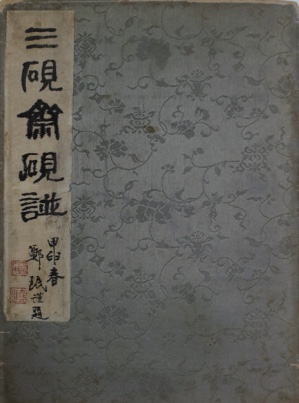
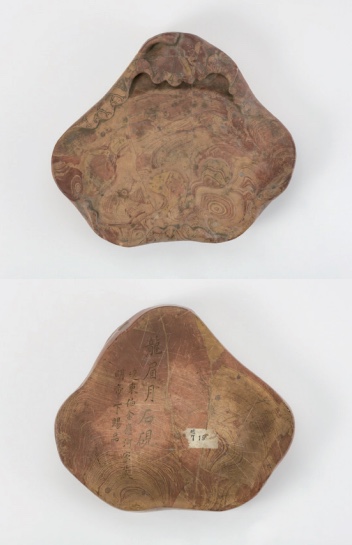
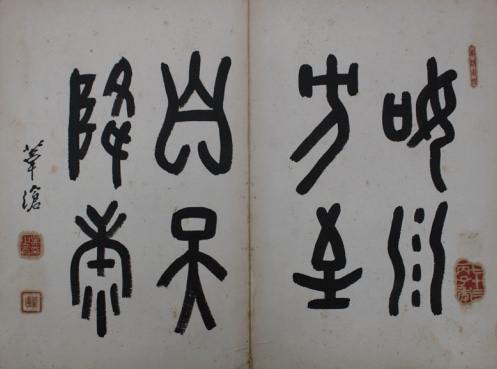
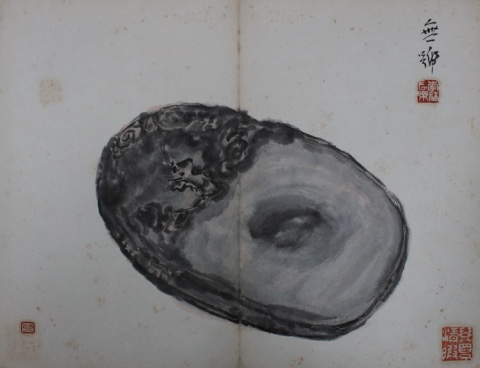
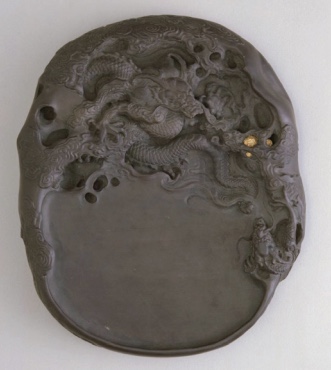
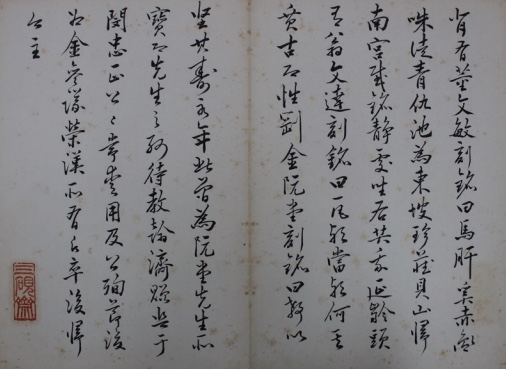
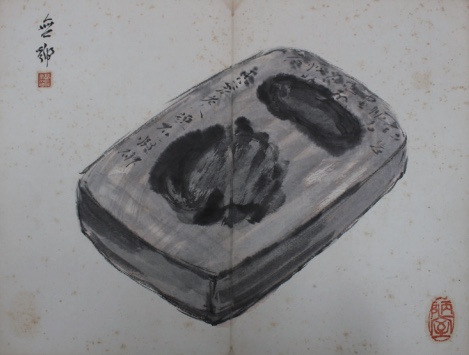
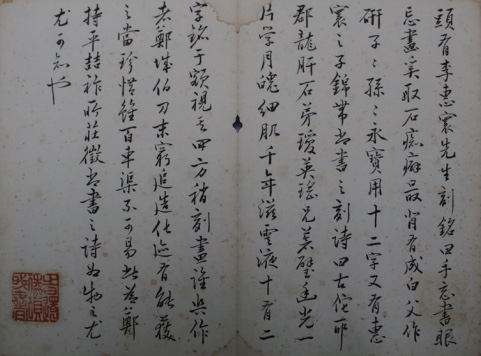
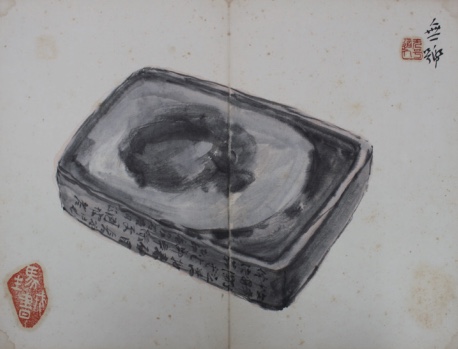
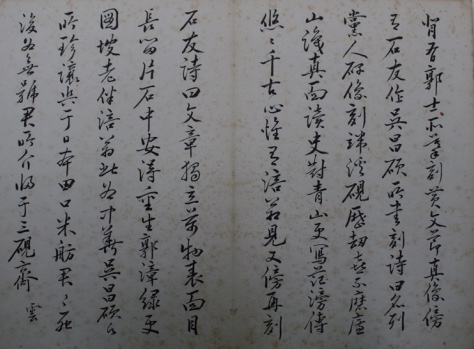
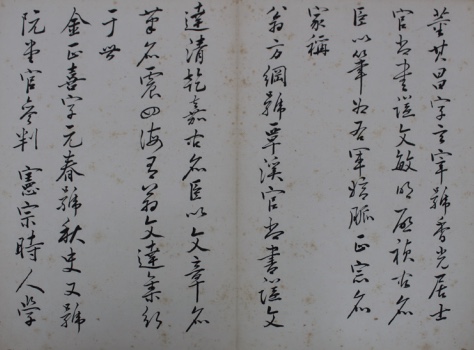
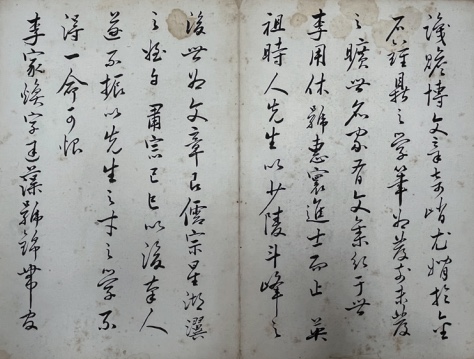
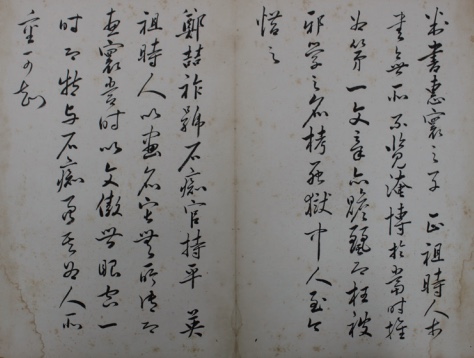
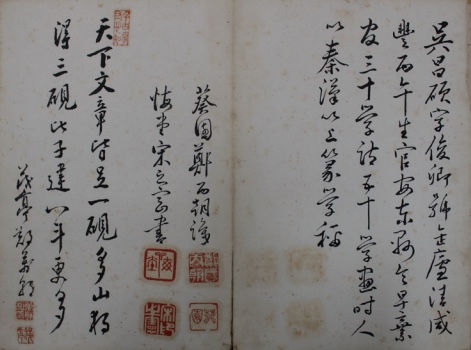
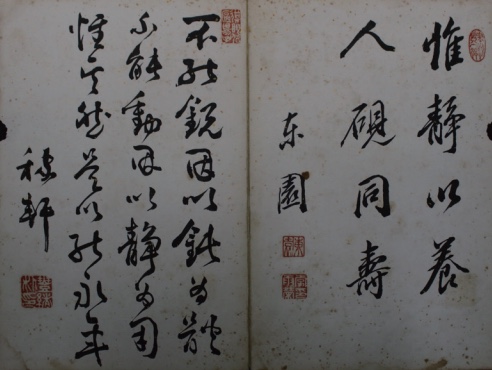
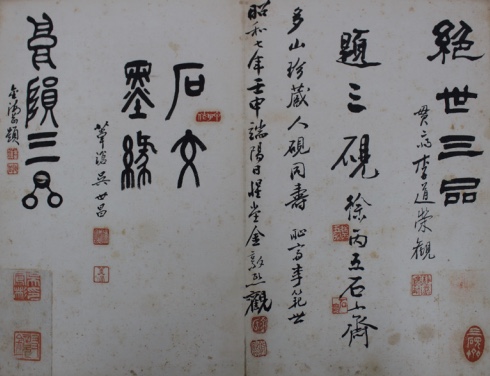
Table 1. Contents of the Catalogue of the Three Inkstones Studio
| Page | Content | Text | Inscriber· Calligrapher / Painter | Seal |
|---|---|---|---|---|
| 1 | “Xiaoya (小雅)” section of the Book of Songs (詩經) written in seal script | 如川方至, 自天降康. 葦滄 | O Sech'ang | 【東塗西抹】 |
| 【七十三丙子年】 | ||||
| (1936) | ||||
| 【吳世昌印】 | ||||
| 【葦滄】 | ||||
| 2 | Inkstone (1) | 無號 | Yi Hanpok | 【李福長樂】 |
| 【琴得淸暇】 | ||||
| 【無號】 | ||||
| 3 | Encomium on the inkstone (1) | 背有董文敏刻銘曰, “馬肝奚赤, 鳳咮徒靑, 仇池爲東坡珍藏, 貝山歸南宮, 載銘靜處坐右, 共我延齡.” 頭有翁文達刻銘曰, 瓦歟當歟, 何其質古而性剛. 金阮堂刻銘曰, 靜以堅其壽永年. 此嘗爲阮堂先生所寶, 而先生之孫待敎翰濟, 贈與于閔忠正公, 閔忠正公常愛用, 及公殉節後, 爲金參議榮漢所有, 其卒後歸今主. | Pak Yŏngch’ŏl | 【三硯齋】 |
| 4 | Inkstone (2) | 無號 | Yi Hanpok | 【陋室】 |
| 【福印】 | ||||
| 5 | Encomium on the inkstone (2) | 頭有李惠寰先生刻銘曰, “手忘書, 眼忘畵, 奚取石? 痴癖最.” 背有 “成白父作硏, 子子孫孫永寶用,” 十二字. | Pak Yŏngch’ŏl | 【時還讀我書】 |
| 又有惠寰之子, 錦帶尙書之刻詩曰, “古佗耶郡龍肝石, 弟瑷英瑶, 兄蒼璧, 幽光.” | ||||
| “一片學月魄, 細肌千年滋雲液,” 十有二字銘于額. | ||||
| 視其四方稍刻畫, “誰與作者鄭城伯, 刀末窮追造化迹, 有能獲之當珍惜, 雖百車渠不可易.” 此爲鄭持平喆祚所莊徵, 尙書之詩爲物之尤. 尤可知也. | ||||
| 6 | Encomium on the inkstone | 惟靜以養, 人硯同壽. | Yi Uyŏng | 【筆精妙入神】 |
| 東園 | 【東園】 | |||
| 【李雨榮印】 | ||||
| 不能銳, 因以鈍爲體, 不能動, 因以靜爲用. 惟其然是, 以能永年. | Pak P’ungsŏ | 【其眼似歐陽子】 | ||
| 稼軒 | 【朴豊緖印】 | |||
| 7 | Inkstone (3) | 無號 | Yi Hanpok | 【無號道人】 |
| 【戎馬書生】 | ||||
| 8 | Encomium on the inkstone (3) | 背有郭士(雲)所摹刻黃文節眞像, 傍有石友作吳昌碩所書刻詩曰, “名列黨人碑, 像刻端溪硯. 歷劫喜不磨, 廬山識眞面. 讀史對靑山, 更寫范滂傳. 悠悠千古心, 惟有涪翁.” 見又傍再刻, “文章獨立萬物表, 面目長留片石中. 安得重生郭漳綠, 更圖坡老伴涪翁.” 此爲中善吳昌錫卽所珍, 讓與于日本田口米舫君, 君死後, 爲無號君所介, 歸于三硯齋. | Pak Yŏngch’ŏl | |
| 9 | Commentary on the historical figures mentioned in encomia | 董其昌, 字玄宰, 號香光居士, 官尙書, 諡文敏. 明啓祯間名臣, 以筆爲右軍嫡脈正宗, 名家稱. 翁方綱, 字覃溪, 官尙書, 諡文達. 淸乾嘉間名臣, 以文章名筆, 名震四海. 有翁文達集行于世. 金正喜, 字元春, 號秋史, 又號阮堂. 官參判, 憲宗時人 學… | Pak Yŏngch’ŏl | |
| 10 | Commentary on the historical figures mentioned in encomia | (學)識贍博, 文章奇峭, 尤嫺於金石鍾鼎之學, 筆爲發前未發之, 曠世名家, 有文集行于世. 李用休, 號惠寰, 進士而止. 英祖時人. 先生以少陵斗峰之後世, 爲文章, 卽儒宗星湖瀷之姪. 自肅宗己巳以後, 南人遂不振. 以先生之才之學, 不得一命可恨. 李家煥, 字廷藻, 號錦帶 官… | Pak Yŏngch’ŏl | |
| 11 | Commentary on the historical figures mentioned in encomia | (官)判書, 惠寰之子. 正祖時人. | Pak Yŏngch’ŏl | |
| 於書無所不覽, 淹博於當時推爲第一文章. | ||||
| 亦贍麗而枉被邪學之名, 拷死獄中, 人至今惜之. | ||||
| 12 | Commentary on the historical figures mentioned in encomia | 吳昌碩, 字俊卿, 號缶廬. 淸咸豐丙午生, 官安東縣令, 早棄廢. 三十學詩, 五十學畵, 時人以秦漢以上篆學稱. | Pak Yŏngch’ŏl | |
| 葵園 鄭丙朝 識 | Chŏng Pyŏngcho | 【鄭丙朝氏】 | ||
| 【葵園】 | ||||
| 悔堂 宋之憲 書 | Song Chihŏn | 【悔堂】 | ||
| Colophon | 【宋之憲印】 | |||
| 天下文章, 皆足一硯, 多山獨得三硯, 比子建八斗更多. | Chŏng Mancho | 【千古事寸心知】 | ||
| 茂亭 鄭萬朝 | 【萬朝私印】 | |||
| 【茂亭】 | ||||
| 13 | Colophon | 【三硯齋】 | ||
| 絶世三品 | Yi Toyŏng | 【靜嘉樓針】 | ||
| 貫齋 李道榮觀 | ||||
| 題三硯 | Sŏ Pyŏngo | 【徐丙五印】 | ||
| 徐丙五 石齋 | 【石齋】 | |||
| 多山珍藏, 人硯同壽. | Yi Pŏmse | |||
| 恥齋 李範世 | ||||
| 昭和七年壬申 端陽日 惺堂 金敦熙觀 | Kim Tonhŭi | 【金氏】 | ||
| 【敦熙】 | ||||
| 石文墨緣 | O Sech’ang | 【甲子老人】 | ||
| 葦滄 吳世昌 | 【吳世昌】 | |||
| 【葦滄】 | ||||
| 其隕三品 | Kim Kyuchin | 【圭鎭】 | ||
| 金海岡題 | 【海岡】 | |||
| 【吳鳳彬印】 | ||||
| 【友鏡】 |